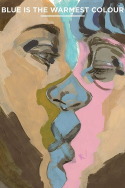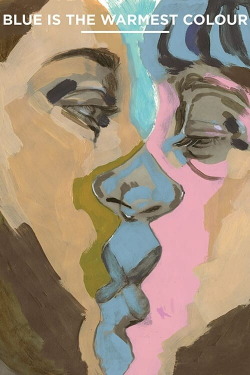
Review of Blue Is the Warmest Color (2013) by Yannick D — 28 Sep 2014
Whenever a movie gets as much critical acclaim as Blue Is the Warmest Colour I tend to get a little suspicious. There is a certain type of movie that critics really like to drool over. I like to call these movies "novelty films". They are films that have at least one distinct aspect to them that differentiates them from the rest. When Crouching Tiger, Hidden Dragon was the first proper Chinese martial-arts fantasy to set foot in the west critics instantly hailed it as a masterpiece. People had never seen anything like it and such trivial things as its overlong and clichéd story were subsequently overlooked by many. Sometimes the raving reviews for novelty films are deserved - as was the case with last year's Gravity - but more than often they seem to get hyped for the sole reason that they are different. But does different always mean good?
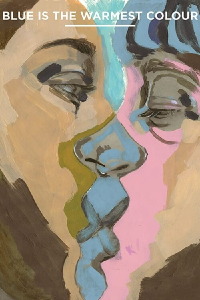
Blue Is the Warmest Colour is a French drama that won the Palme d'Or at the 2013 Cannes Film Festival - one of the most coveted awards in the industry. The novelty aspect in this case is a lesbian relationship between the two main characters. Apart from Brokeback Mountain there have been few well known films focusing on same sex relationships and even fewer focusing on that of two women. Therefore the question needs to be asked: Is Blue Is the Warmest colour just more critic bait or is it genuinely a masterpiece?
The first indicator that the latter is not the case is the film's running time. No movie needs to be three hours long unless it has a really good reason for it. Blue Is the Warmest Colour does not. One could easily cut 40 minutes of the film and it wouldn't lose any of its dramatic quality. And one particular area in which cuts should have been made is undoubtedly the sex scenes.
I'm not going to touch on the many severe accusations by the cast and staff towards director Abdellatif Kechiche. A movie should be judged for what is visible on screen. But even putting that aside, it is no understatement to say that there has been a lot of controversy about the scenes' explicit nature.
I want to make one thing clear: I have no problem whatsoever with how graphic the scenes are or with what they depict. What I do have a problem with is that they just don't feel necessary at all. Film critic Alonso Duralde hit the nail on the head when he said: "The scenes went on past the point of what they needed to accomplish in a dramatic sense". And this isn't just a problem of the sex scenes. Many much less controversial sections of Blue Is the Warmest Colour are similar in that regard. Kechiche just cannot reign himself in and this is a fundamental problem throughout the whole film.
On the plus side: The two main actresses are fantastic. Especially in the case of Adèle Exarchopoulos it is amazing just how consistent and how believable her character is over the full length of three hours. Léa Seydoux does a great job as well though we only really get to know her character about half way into the movie. I would be lying if I said that I wasn't interested in the dynamics between the two or that their relationship didn't feel real.
Also commendable is that the movie does not turn into a stereotypical drama about homosexuality. Apart from some early bullying-scenes at the main girl's school, the fact that at the center of the plot is a same sex relationship is largely underplayed. I don't want to say that the topic itself is not relevant, because it is, but I think the movie would have been much more predictable had it turned into a public-awareness campaign. It portrays the relationship as normal and unspectacular. These are just two people loving each other and their genders simply aren't important.
In the end however this strength turns into the movie's biggest weakness. Because it treats its same sex relationship as such a natural and almost unexciting thing, the movie itself starts to feel unexciting and much more conventional overall. Once you strip the narrative down to its most basic form you begin to realise that this is really an over glorified ordinary relationship drama.
To conclude and to answer the question I asked before: Is Blue Is the Warmest Colour a masterpiece? No. Is it an overrated piece of garbage that doesn't deserve all the attention? No. Despite its evident flaws, Blue Is the Warmest Colour is still an effective relationship drama. It just isn't much more than that.
This review of Blue Is the Warmest Color (2013) was written by Yannick D on 28 Sep 2014.
Blue Is the Warmest Color has generally received very positive reviews.
Was this review helpful?