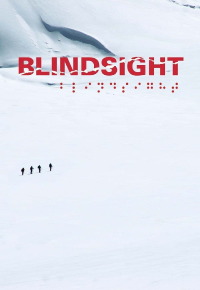
Review of Blindsight (2006) by Everett J — 22 Apr 2008
[i]Blindsight.
[/i]dir. Lucy Walker.
This film is about so much more than six blind kids climbing up the side of a menacing, terrifying mountain. There is essential poetry in the highest reaches of the mountain, in this case the Lhakpa-Ri peak of Mount Everest. There is the blinding fear that afflicts most mortals when they begin to even imagine themselves embarking on such a dangerous trek. And, naturally, there is the triumph that emerges when one realizes they have done something that most of the people around them consider impossible. It's daunting enough for the sighted, but for the blind it is a fated act of extraordinary courage to pursue such an aim. These kids redefine courageous and daring. They are simply marvels of the boundless possibilities inherent in the human spirit.
It all begins with a blind American mountain climber named Erik Weihenmayer. We meet him as he's attempting to become the first blind person to ever scale Mt. Everest. He is perched precariously on a ladder that he pulls himself along with ropes. It looks utterly terrifying but one wonders if the fear is lessened by not being afforded the chance to look down. Does eyesight crimp your concentration in such situations? Can the eyes actually impede the necessary progress in such a technical maneuver? We learn that Weihenmayer was successful in his attempt and has climbed several other daunting peaks as well. Sabriye Tenberken is a German woman who started Braille without Borders and who gets in contact with Weihenmayer and coaxes him to Tibet to meet and greet the kids at the school.
Soon, there is talk about making an attempt at the mountain and quickly guides are brought in and the party materializes that will make the effort to climb Lhakpa-Ri. After several days of rushed training, the group sets out. The steps are tentative at first. Slow, steady progress is the order of the day as each kid acclimates themselves to the trying aspects of the climb. There are mini dramas all the way up the mountain. At several points, it is discussed whether this or that kid should be sent down. Kids get sick, the guides argue. Intercut with the climb are mini-biographies of all the participants. We learn of the difficulties they have faced and the pains that have marked their lives.
In several cases, the belief, shockingly held among Tibetans, that demons or serpents have caused the children to become blind are prevalent. There is a cold attitude toward some of them and they are essentially blamed for their blindness because their karma dictates that they did something exceedingly awful in a previous life. One boy has suffered dozens of cigarette burns on his body due to not bringing home enough money while begging.
The stories give the film an emotional depth that would be lacking if it merely documented the climb. Each child struggles in their own way and the film focuses on one kid--dubbed Lucky despite the absolute horror of his life-- who has a difficult time keeping up with the others. His saga is heart wrenching because it is clear that he needs to be successful at this perhaps more than the others and his pained steps are little miracles that resonate throughout the film.
The images of Everest are simply dazzling and mesmeric. They are painterly and quite benign from the ground. However, they become glistening dragons once the journey is undertaken and the travelers come closer to the peak. As the youngsters trudge along we are given a strict sense of everything that might go wrong in undertaking such a difficult enterprise. At first, the terrain is relatively flat and it's easy to maneuver one's body across it. Gradually, however, it becomes more treacherous and skill is required to make it through these rough passages where dangers surmount and can quickly overtake even the most experienced of climbers.
Overall, many of these children took this experience and built upon it. One started a braille publishing house and two others opened up a massage parlor together. In many ways, the climbers were able to realize certain aspects of themselves that would have otherwise lain dormant. The intoxication of the mountain affected them in such profound ways that they will, quite literally, never be the same people again. They all reached their own personal peaks and gained an entirely new perspective on life, on their problems, and the blind prejudices that continue to afflict their families and other villagers.
The film asks the basic question: who's really blind here? These children have such amazing spirits and they are so open to everything the world can throw at them. They deserve the opportunity to move away from false accusations into lives that are honorable and worthwhile. The trek up the mountain did more to help facilitate this necessity than anything else they had previously experienced.
This review of Blindsight (2006) was written by Everett J on 22 Apr 2008.
Blindsight has generally received positive reviews.
Was this review helpful?