Review of Blind Spot: Hitler's Secretary (2002) by Kgaard . — 04 May 2004
[font=Times New Roman][color=darkorange][size=3][font=Arial][i]The Pianist[/i] (Roman Polanski, 2002)[/font] [/size][/color][/font].
[font=Times New Roman][size=3][color=darkorange]I found the first half of the film to be rather slow going, and not particularly revealing of the characters, but the second half redeems the film to a great extent; Szpilman?s concert for an audience of one was a delicately moving scene.[/color][/size][/font].
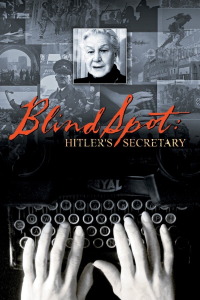
[font=Times New Roman][size=3][color=darkorange][font=Arial][i]Blind Spot: Hitler?s Secretary[/i] (André Heller and Othmar Schmiderer, 2002)[/font] [/color][/size][/font].
[font=Times New Roman][size=3][color=darkorange]In the coming months, perhaps years, we will be subjected the dreary reality TV of the trial of Saddam Hussein and, presumably, some of his henchman. Expect to learn little. It will be, at best, a gaudier version of the trial of Slobodan Milosevic, and whatever happened with him, anyway? Saddam is no Hitler, for sure, more like a glorified mob boss who transformed realpolitik into a playing field for his outsized, corrupt imagination. It is hard to say if Hitler?s mythological status would have been punctured by his appearing on newsreels having his teeth examined, or by standing in a glass booth with headphones on, absorbing, or deflecting, the litany of his crimes. Perhaps it would have been better, and we would not be reduced to making Hitler and his Nazis the Michael Jordan and Chicago Bulls of evil, the stick against which all atrocities are measured. As it is, Hitler has become so encrusted in dark legend it has become impossible to approach him directly; he?s like an evil sun that can only be looked at by examining its shadow.[/color][/size][/font].
[font=Times New Roman][size=3] [/size].
[/font][font=Times New Roman][size=3][color=darkorange]In this film the shadow falls upon Traudl Junge, a German woman who in 1942 became Hitler?s private secretary, and remained with him to his final days. Heller and Schmiderer rightly settle for letting Junge tell her story without the embellishment of photos, film, or anything else to trick up the film visually. The only technique of note is that Junge is sometimes filmed watching her own narration, sometimes commenting on it, heightening the sense that even in matters touching upon good and evil that perception can play the largest part. Junge struggles with what she frankly admits was her sometime admiration of and attraction to a powerful and by all accounts charismatic man, contrasted with her knowledge of the horror he had wrought. It is evident that she still sees him as a man?dangerous, manipulative and destructive, but a man nonetheless. What Junge adds to the historical record is fairly thin; what?s interesting is her human struggle with guilt, knowledge and reflection. Uncertain as to what she might have done, but finding it difficult to absolve herself of what she did do, in the end Junge may not do as much to help us understand Hitler as she does to help us understand ourselves.[/color][/size][/font].
This review of Blind Spot: Hitler's Secretary (2002) was written by Kgaard . on 04 May 2004.
Blind Spot: Hitler's Secretary has generally received positive reviews.
Was this review helpful?