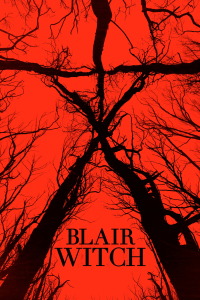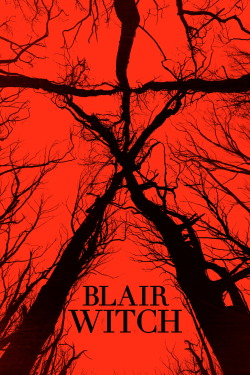
Review of Blair Witch (2016) by Ruby P — 14 Sep 2016
Alan Wingard's sequel to Daniel Myrick and Eduardo Sánchez's 1999 trailblazer strips the original of all its independence, rawness, spontaneity, technical innovation and atmosphere and leaves the viewer with the kind of badly acted, poor written, flatly directed studio project that comes across as a convention bound medley of contemporary horror film cliches, which only terrifies a viewer in that it demonstrates what happens when artistic value and independent film is affected by a major studio. In Blair Witch Wingard has not made a great contribution to cinema. Instead, what he has done is enslaved himself to the second Hollywood studio system, the system which is shunning the idea of creative control so as to take hold of the masses and ensure they are watching cinema which is not going to provoke thought, inspire creativity or even make great horror.
The most interesting thing about the 1999 original is the cinematography, purely for the stylistic choices regarding camera movement and choice. Of course the shot composition was of a lesser value at the time, and remains that way with this. This film was shot by Robby Baumgartner, who's past credits include Paul Thomas Anderson's There Will Be Blood (2007)-for which he was assistant camera operator. In this picture Baumgartner once again shows that he is not at the standard or cinematic worth of the likes of John L. Russell, Gianni di Venanzo or Sven Nykvist. He is bound to full convention and devotion to bland shot compositions. His camera movements also are incredibly damaging to the overall quality of the film. They are so shaky and poorly focused that the unfortunate viewer does not get time to be entranced with the film's atmosphere (or lack thereof). The entire use of lighting revisits tricks that he copied off the 1999 film. At no point does Baumgartner bring an individual style to the imagery. He merely uses convention, such as the unbroken tracking shot, which is one of the greatest and most majestic artistic stylisations of all time-when in the right hands. It most be truly unbroken-not shaking up and down, left and right, out of focus with lens flares distracting the viewer from the actual onscreen events. That is a clear example of a formal element being bastardised for lesser effect. And although one may try to argue that the shakiness adds to the atmosphere and the confusion, they would be wrong. A tracking shot where the camera is fixed on what is happening without shakiness will attract more attention. The viewer will see what is happening and be hypnotised by the sheer beauty of the film. The audience would be drawn into the atmosphere of the film world. Take Russell Metty's fantastic opening tracking shot in Orson Welles' atmospheric noir Touch of Evil (1958). A car bomb is placed on the back of a car before the driver and his mistress get in. They drive through a street for three minutes with a Narcotics officer and his wife walking alongside the car. The bomb could go off at anytime, and the camera follows this tense yet somehow natural atmosphere. And the suspense is withheld as the camera zooms in on the narcotics officer kissing his wife before finally Metty cuts to an image of the car exploding. Use of static camera leads to heightening tension and just when one least expects it, the impact. Fabulous. However, Baumgartner's jolting tracking shots disorient the viewer and makes them wonder why they paid good money to watch this.
Another key aspect, particularly with the horror genre, is the editing. The long shots, the timings, the cutting all play an important part in the film's atmosphere. None of that works out here. The film is jumpy and poorly timed, with camera jumping around so often that the viewer cannot be absorbed into what is happening. At the end of the day, the viewer must be given something to give the atmosphere and ambience, in terms of visuals and sound.
The sound in this film is the only somewhat redemptive figure-even then, trapped by convention. A solid mixing of all sound effects however all the horror movie cliches abound. The high pitched shrieking noises. The screams, huffing and panting. They are so hammy and in the way that they ruin the film. This truly is a study in cheap thrills, based in part on the weaknesses of the ensemble.
In the cast of this film, all performances are poor. The actors and actresses involved clearly aren't very devoted to being in character. They aren't devoted to dramatic flow, instead making noisy high-pitched squeals. There is a certain scream that is perfect for horror films-British actress Jacqueline Hill achieves it in the cliffhanger ending to the 1963 Doctor Who episode The Dead Planet. Once one has heard this magical and effective scream, one cannot view this film and say, "Yes, I felt those actresses were frightened." Also, the conviction, particularly for Wes Robinson as the paranoid and superstitious redneck Lane (the characters in the film have very intricate name choices). He must display himself as convinced in what is happening and prepared for anything onscreen. Conviction is key. A textbook example of this is Patrick Troughton as the Priest in Richard Donner's The Omen (1976). Troughton convinces a viewer that he or she is watching a frightened figure, whereas Robinson looks like a foolish prankster out to convince the characters, against all the odds, that death awaits all who enter the woods. And he is very unsuccessful.
Of course, it was Sir Alfred Hitchcock, the Master of Suspense, who claimed that all you need for a great film is a great script, a great script and a great script. Shame that Simon Barrett couldn't deliver such a thing. The characters are poorly formed, with nonsensical motives and weak explanation for why this should work. For example, the main character Jake wishes to find out whether his sister is still alive. A ridiculous reason that no one in their right minds would accept as plausible. Had he simply said, he wants truth about what happened to her and who murdered her, it would've worked better. As it happens, an idiot full of naïvety is on a journey of self-discovery, that probes about as deeply as an elastic band into a mole dropping. Also, the fact that Lane makes fake crosses to frighten the other expedition members, before openly confessing to this, massively diminishes the impact of the subsequent sequences. Barrett's screenplay also is bad at dialogue and plotting. Scenes are repeated throughout the film, and the talking style of the characters has neither the realism of Satyajit Ray's Pather Panchali (1955) or the symbolism and poetry of Ingmar Bergman's The Virgin Spring (1960). It is cliched and terrible.
The most important aspect of film making is the director's contribution. And Wingard's contributions truly stick with removing atmospheric value, poor pacing (the order of sequences is very badly drawn out) and ensuring that Myrick and Sánchez's once original ideas are entirely and lazily rehashed. A directorial failure from a man who shouldn't be expected to make any masterpieces.
Overall, this film really is just a B-Movie without the charm of being knowingly terrible. It tries too hard to have the rich and powerful character study of Stanley Kubrick's The Shining (1980). To have the superbly mounted tension found within F. W. Murnau's Nosferatu: A Symphony of Horror (1922). To have the freshness and creativity of Myrick and Sánchez's The Blair Witch Project (1999). This is a cheap attempt to cynically exploit the success of a slightly worthier piece of film for the sake of a dollar. The film lacks atmosphere, innovation, and only symbolises the downfall of American independent film. Do not bother with this.
This review of Blair Witch (2016) was written by Ruby P on 14 Sep 2016.
Blair Witch has generally received mixed reviews.
Was this review helpful?