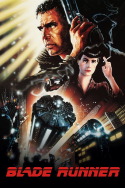
Review of Blade Runner (1982) by Cinemasins — 08 May 2015
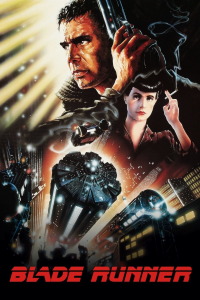
In the nearly 25 years since its original release, Blade Runner has become one of the most discussed, debated, and influential science fiction movies. These days, it's almost impossible to find a gritty science fiction motion picture that doesn't owe at least a small debt to Blade Runner's visual style. The movie is also one of the first major motion pictures to have been given a red carpet "Director's Edition." In cooperation with Warner Brothers, Ridley Scott re-tooled the movie, making minor changes and eliminating the much-maligned voiceover. In late 1992, the new version was released in a limited number of theaters and was universally acclaimed as the "definitive version" by fans worldwide.
Considering how respected Blade Runner is in the 2000s, it's difficult to remember that it was widely viewed as a failure during its initial release. Reviews, for the most part, were negative. (This isn't surprising. Cutting-edge science fiction is often viewed negatively at first then re-evaluated later. 2001 is a classic example.) The box office was tepid, and the film failed to make back its production costs. Viewers, expecting something more popcorn-oriented from a Harrison Ford science fiction movie, were disappointed by the dark, serious nature of the project. The cast and crew, who had nearly rebelled against the director during production, were in some cases unenthusiastic in their support of the finished product.
Blade Runner is as much of a morality play as it is an action/adventure story. The question of whether or not the replicants are "alive" echoes themes from countless novels, movies, and television series. It lies at the heart of Issac Asimov's I, Robot (both the book and the movie). It's central to the premise of the current TV series Battlestar Galactica (which borrows Blade Runner's "skinjob" slang to describe human-looking androids). Blade Runner didn't invent the issue but it arguably did more to popularize it than any other post-Asimov source.
Those expecting to see Harrison Ford in full Han Solo/Indiana Jones action hero mode are primed for disappointment. Deckard is still capable of getting the job done, but he's not gung-ho about it. He's a reluctant cop, and his reluctance becomes more apparent as the movie unfolds. He's also not the blade runner he used to be. He does the job, but gets the hell kicked out of him on several occasions and, without Rachael's timely intervention when he confronts Leon, he wouldn't be around to chase Pris and Roy.
Blade Runner is not known for action set pieces. There are four, each associated with the death of a replicant. The most exaggerated are the conflicts between Deckard and Pris and Deckard and Roy, but there's nothing in either to match the elaborate workings of Ford's previous movie, Raiders of the Lost Ark. Blade Runner delivers its share of tension and suspense, but Ridley Scott's intention with this film was to make something worth thinking about not just a mindless jolt of adrenaline.
The movie is loosely based on Do Androids Dream of Electric Sheep by Philip K. Dick, and it represents the first time any of the prolific science fiction author's works was adapted for a motion picture. Reportedly, Dick was pleased with the result even though Blade Runner diverged considerably from his story. What most impressed Dick was the look of the film and that has become Blade Runner's legacy. The mixture of high technology (air cars) and poverty (fires in trash cans) results in indelible images. Blade Runner takes place in darkness and rain. The film noir influences are evident, but so are the science fictions ones. Scott's ability to fuse these two has created a blueprint that dozens of other "serious" science fiction films have followed. The Blade Runner look is in direct contrast to the antiseptic appearance of Star Wars and Star Trek, the reigning science fiction poster franchises of the day. (Star Trek II: The Wrath of Khan was released three weeks prior to Blade Runner in 1982.).
Blade Runner is a rare science fiction movie so full of material that pages can be written about it without scratching the surface. A review like this can provide little more than an overview. A detailed exploration of the movie, its style, and its mysteries requires dedication that only someone immersed in Blade Runner lore can provide. Currently, the film is available in the United States only in the director's cut. Warner Brothers, however, has promised an exhaustive box set next year with multiple versions. It will be interesting to see whether those editions offer new insights or expand upon the film's already rich tapestry.
This review of Blade Runner (1982) was written by Cinemasins on 08 May 2015.
Blade Runner has generally received very positive reviews.
Was this review helpful?