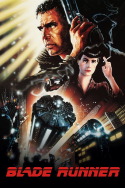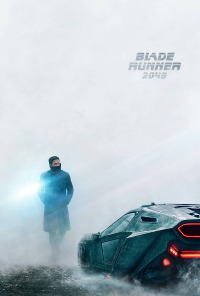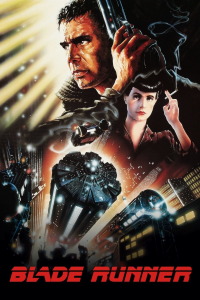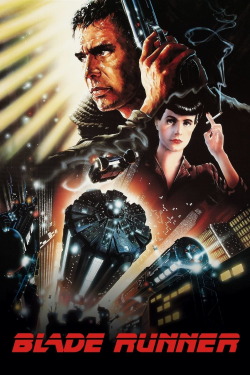
Review of Blade Runner (1982) by Miroslav G — 14 Sep 2015
Not many films can be as intricate, bizarre, and beautiful as Blade Runner, all while being regarded as a masterpiece at the same time. But as many people may know, things weren't always that way for the film.
Blade Runner was misunderstood upon its initial release, receiving a mixed response by critics and audiences. It was dismissed simply as a film that solely relies on its special effects and visuals while completely lacking in its story and characters, causing the film to fall into obscurity near-instantly before ultimately being resurrected to the awareness of general audiences again through a massive cult following decades later.
On top of that, the film is infamously known for having a ridiculous amount of versions/cuts, five of which have been officially released: Workprint, Theatrical, International Theatrical, Director's Cut, and Final Cut, with each cut having something different to offer, and that's probably why the film appeals to so many people and has been able to stay relevant after all these years.
For me however, the theatrical cut of the film is rather flawed as it was cut down to fit the desires of the studio, never reaching its full cinematic potential as a result. Plus, it's plagued by such problems as Harrison Ford's pesky, clunky sounding, blatant, and rather unnecessary narration, a pretentious happy ending being shoehorned in that sorely sticks out from a film that's this relentlessly dark and bleak, and most of all, the lack of and less of an emphasis on the messages and themes that make this film so substantial in the first place.
The international theatrical cut is merely the theatrical cut with a few added and extended scenes, but none of which add anything substantial to the film in the slightest, so it shares the same flaws as the theatrical cut.
However, it was the only version of the film that was available through home video for a long time, and is subsequently the reason why the film garnered a cult following in the first place, so I'll give it credit for that.
It wasn't until ten years after the film's initial release that the director's cut of the film was released and would add much to what we had previously seen while getting rid of much that we didn't like about the theatrical cut.
Gone is the shoehorned happy ending, and in its place is a thought-provoking ambiguous ending. The pesky narration has been completely omitted, being replaced with a great sense of mystery and detective work, both of which add to the film's noir vibe.
And most importantly, there's a much greater focus here on the characters, story, and themes. But all of that wouldn't prove sufficient enough due to the fact that it wasn't overseen by Ridley Scott himself, subsequently never living up to his vision of what the film should be, so we'd have to wait even longer for a definitive version.
That only leaves me to mention the final cut, and it is undoubtedly the best and subsequently, definitive version of the film by far. Not only was it overseen by Scott personally, but it's also the most accurate to the characters, story, themes, and aesthetic that Ridley Scott envisioned all those years ago.
Receiving a 4K transfer, cleaning up the film's look, and even fixing some technical errors in the film, Blade Runner has never looked better, featuring some of the most gorgeous cinematography ever put to film and is an absolute visual treat.
Harrison Ford gives a great performance as Rick Deckard; it was so refreshing to see Harrison Ford in a much more vulnerable role, showcasing his range as an actor and proving that he's not just a movie star.
And even though Deckard may not be as iconic a role for Ford as Indiana Jones or Han Solo is, in my opinion, it's his best. Rutger Hauer's eccentric performance as Roy Batty is the highlight performance of the film, stealing the show in practically every scene he's in and qualifying as one of the greatest villains in film history.
And who could forget the "Tears in Rain" soliloquy that Batty gives at the end of the film? It's absolutely beautiful and one of the best monologues ever put to film. The themes of identity, equality, mortality, and humanity have never been as present or compelling as they are in this version, especially humanity, and more specifically, what it really means to be human.
Just ask yourself, who's more human: An unfeeling "human" like Deckard who doesn't feel very alive and kills for a living or an emotionally complex replicant like Batty that loves life and wants to cling onto it for as long as he can? You could even ask yourself who the hero really is in the film just by that observation.
And as for the ambiguous ending, the film works whether Deckard is really a replicant or not. You could look at him as a replicant that finally finds his identity or as a human that finally regains his humanity, either way, it's a very compelling story.
And in the end, it's not the answer to the question that matters, but the question that was raised itself and it's questions like these that make Blade Runner truly stand the test of time. Ultimately, Blade Runner is a sci-fi and neo-noir masterpiece that still stands the test of time because it was ahead of its time to begin with, continues to influence countless other sci-fi films, proves to be just as relevant, if not more relevant, today, and is Ridley Scott's finest contribution to cinema.
This review of Blade Runner (1982) was written by Miroslav G on 14 Sep 2015.
Blade Runner has generally received very positive reviews.
Was this review helpful?