Review of Black Narcissus (1947) by Jamie T — 01 Aug 2010
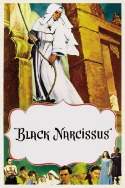
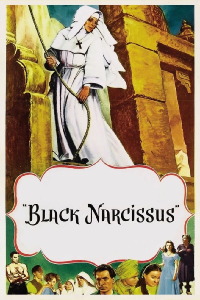
Michael Powell and Emeric Pressburger's films are, at their best, unlike those of any other director, but in a subtle, almost intangible way. Perhaps it's their willingness to indulge melodramatic themes by treating them seriously; the idea that the "House of Women", the Himalayan palace where a group of Anglican nuns attempt to establish a convent, has an almost supernatural power that drives those who live in it into a frenzy--as one nun puts it, "You either have to ignore it or give yourself up to it.
" The film's genius is in how thoroughly it evokes the power of the House (renamed St. Faith by the nuns), both visually and dramatically. The film's use of color is extraordinary, and it won Oscars for Alfred Junge's sets and Jack Cardiff's photography.
Junge created an entire world without leaving English soil, and his work is exemplary. St. Faith itself is a marvelous set, wholly convincing, while the Himalayan backdrops (hand-colored photographs and paintings), if a touch less convincing now than in 1947, are still striking, and at times undetectable.
The clash of colorful Indian clothing with the nun's white habits, the lush forests around St. Faith, the use of blues and grays and whites...it's one of the most perfect examples of color filmmaking there is.
And Junge's settings are perfectly photographed by Cardiff, who evokes feelings of isolation, grandiose scale, and cramped tension brilliantly. The characters are photographed equally well, especially Sister Ruth (Kathleen Byron), who in a climactic moment appears as pale as death; the sight is magnificently haunting.
Brian Easdale's music perfectly complements the pictures, bursting with color, life, and drama; the film is a feast for the ears as well as the eyes. Powell and Pressburger take a thin story (more a series of scenes than a true narrative) and make it as tense as any thriller, and as haunting as any horror film, but also fill it with humor, passion, and excitement; they adapt Rumer Godden's novel brilliantly (I would guess, having not read it), and while the dialogue is occasionally too on-the-nose, it's easily forgivable.
Of course, Powell and Pressburger were equally brilliant in their casting. Deborah Kerr, despite having become a big name by this point, does not impose star-acting upon Sister Clodagh; she embodies the conflict between Clodagh's natural warmth and the toughness needed to lead a convent.
Kathleen Byron, as the crazed Sister Ruth, is marvelously, chillingly real, in her portrait of obsession and madness. While it would be nice to see Ruth act sympathetically at least once (and it would be fascinating to learn why she ever became a nun in the first place), Byron's performance is so good that the point becomes academic.
David Farrar is the expatriate Mr. Dean, who acts as the sisters' liaison with the natives, and he provides the perfect foil for Clodagh; earthy, lusty, and irreverent, he butts heads with her while at the same time coming to care for her (although he maintains he loves no one).
Farrar is perfectly cast as well, and feels, like Kerr and Byron, utterly real. Sabu, nearing the end of his starring career, is the good-natured Young General, and, aided by a script which avoids sterotype (Powell and Pressburger were especially progressive in this respect), he brings a feeling of youth and spirit to the film, and he is perhaps the most likable character.
Jean Simmons has fairly little to do as Kanchi, the native girl ready for love (and it's a bit obvious she's a European in makeup), but she's still quite good, having an especially memorable scene where she dances alone, admiring herself in a mirror.
Judith Furse has a quiet power as the formidable Sister Briony, while Jenny Laird is quite likable as the cheerful Sister Honey; Flora Robson's Sister Philippa is rather more interesting, planting a garden of flowers instead of vegetables to try and sate the passions the House stirs in her; her screen time is limited, but Robson's performance is subtle and moving.
Eddie Whalley, Jr. is charming as Joseph Anthony, the boy who acts as interpreter for the sisters and is also a friend to them, while May Hallatt is surprisingly good as Angu Ayah, the eccentric caretaker of the House, although her Ayah would be just as at home as an English eccentric--for better or for worse.
Esmond Knight has but one scene as the Old General, but it's a good one. The character is almost a comic one, but the comedy is not of a condescending kind, and his pronouncement, "Sausages! They will eat sausages!" is one of the film's most memorable lines.
Who played the Holy Man is not recorded, but his silent, unmoving presence is a commanding one, and in some ways his character best embodies the strange, fascinating spirit of this marvelous film.
This review of Black Narcissus (1947) was written by Jamie T on 01 Aug 2010.
Black Narcissus has generally received very positive reviews.
Was this review helpful?