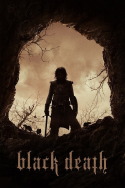
Review of Black Death (2010) by Adnan K — 14 Dec 2011
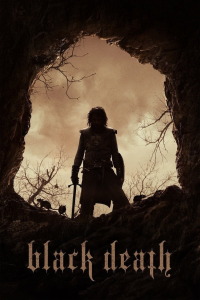
A funny thing happened on the way to making this medieval tale - a morality tale ensued, and to that I say, thank whatever deity you adhere to; otherwise this slow moving tale would have been all atmosphere, little action, and very little to think about.
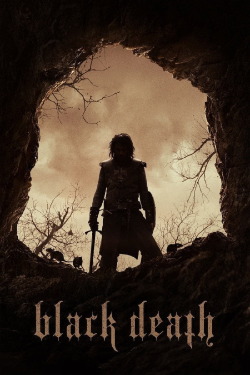
The film sets off rightly enough, with Sean Bean playing a knight Templar, commissioned by the Vatican to seek out a village allegedly immune to the Black Death of the title, and also rumored to be in the thrall of a necromancer (a wizard able to raise the dead). On his way to find the village he stops in a town and visits its abbey, itself not immune to the clutches of the plague. He hires a young acolyte to act as a guide, as said acolyte was raised in the forest wherein the village lies. The acolyte readily volunteers, as he sees it as his opportunity to reunite with the girl of his fancy, whom he has sent away to save her from the plague.
Ok, so much for the setup - the film becomes a medieval road tale for a stretch, with a few battle scenes between the knights and bandits thrown in (unfortunately using way to much hand held shaky cam). When the knights, replete with all kinds of lovely torture devices (used to get at the, ahem, "truth") arrive at the village they find it very normal... at first.
Without going into the details, what the film then boils down to is a simple case of point of view. The villagers believe in what they believe, while the church knights of course believe that anything that steps outside of their narrow tenants is blasphemy and heresy punishable by death (or torture resulting in death, depending on the mood of the knights).
That the villagers resort to the same kind of tactics in order to protect themselves is the telling of the tale for the film, which really tells more about faith than anything else. Cast in the dark ages as it is, the conflict between mysticism and the almighty church is relevant, as the populace, for the most part, are simple and unread (and unwashed for that matter...). What is suggested by Bean's knight is that the church was in a spot of trouble. They blamed the plague on God's wrath (yep, the people were bad sinners and needed to be punished) - and yet that strategy backfired as people don't like being told that they are to blame for anything. Further, when the plague started hitting the abbeys and priests, the people just had to wonder if perhaps the church wasn't just a sham after all.
I wish the film would have devoted itself more into this fascinating argument concerning faith, but it remained rooted too much in its depiction of the dark ages, and then committed the sin of throwing in a surprise twist followed by a totally bogus tag ending that made carried no emotional impact nor made much sense.
This review of Black Death (2010) was written by Adnan K on 14 Dec 2011.
Black Death has generally received positive reviews.
Was this review helpful?