Review of Babette's Feast (1987) by Brett C — 15 Jun 2014
Review In A Nutshell:
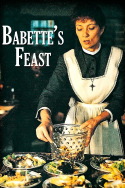
Babette's Feast is about the two daughters of a minister, Martine and Filippa, who have taken in a woman, Babette, as requested by an old admirer of one of the sisters. Babette requests the sisters if she could hold a French feast for the 100th anniversary of the minister's birth.
The film's plot is fairly light, lacking in any sense of complication that would make the film seem dire but surprisingly the film has kept me interested as the film succeeds in having the audience care about its characters, fleshing them out early in the film and given enough time to ensure they are well established. We are treated to opportunity romances for the two sisters and the reasons why they have taken the path they have chosen. They don't dwell on it in the future, as they fully understand where their responsibilities are and what they need in order to gain a full sense of self-actualization. I think if this area of the film, the exploration of the two sisters, failed to deliver an interesting story and contain poor direction then this entire section would have been a drag and would have significantly drop my regards towards the film. The film brings those elements back in the third act, which was done in a satisfying way; the characters don't suddenly decide to feel a sense of regret or feel a sense of need to change their life or view of the world as that would have felt overly forced and highly sentimental, instead they are left moving forward, not dwelling on the past but focusing on their duty in the present and the future. The third act of the film is all about the feast and it is one of the most riveting third acts I have ever experienced in cinema. There may be a lack of elevated tension but that doesn't matter as the way the food was prepared and delivered to the dining table was marvellous. The reaction on the consumer's faces were both hilarious and dramatic, we see their opinions change and somewhat feel that this night would change their view of the world. I wouldn't have minded if the scene extended for another 30 minutes, just based on pure indulgence.
The film explores ideas of vanity and passion in an effective way that only becomes apparent when one is looking or is willing to accept them. The film doesn't shove these ideas down your throat as the director's concerns lies with the execution of the film's story, ensuring that it's interesting and would have audience be engaged with what is going on. The two sisters live very strictly within the rules of their religion and they confining themselves only within the community as this is the path they have chosen for themselves, both girls had an opportunity to live a "better" life but would that really satisfy and fill their souls? No it wouldn't as they would have been sucked into a world of corruption and vanity that eventually they would find themselves regretting their decision and possibly imploding emotionally. Their simple life is what they feel is necessary to live a full and spiritually satisfying life, so it is understandable the threat they feel when Babette has asked for a French feast, as they saw cruel and horrific things, which I never completely saw as ridiculous because it is in its own way "evil" if one can see it that way. Babette's luscious cooking can be seen as over-indulgent, gluttonous, and vein but it is when one hears and sees Babette's side, then they understand. Babette has a passion for cooking and her intentions are good, it's about spreading happiness through her art. True, one can see that there is a selfish motive in Babette's action as by doing this, does give her a sense of pleasure in an indulgent kind of way, but that is humanity. Sometimes it is hard for humans to perform a completely selfless act as it is in our nature to care for our personal needs first. Even the two sisters have shown a sign of weakness from their faith, constantly worrying about Babette, whether or not she would eventually abandon them. The director ensured that by the end of the film, everyone is at an even playing field, and ensures that each person in the film is within arm's length.
The film's photography was gorgeous, with a couple of location shots that would have one drop their jaws to the floor. Though the film does take most of its place indoors, but this doesn't mean the film's beauty has suffered as the cinematographer, along with the contributions by the art and set designers, have created interiors that are appropriate for its period and setting but most important beautiful. The designers are aware that simplicity is the key in order to have the set feel in tune with the characters' personalities. If one looks at the walls and tables, there are barely anything on them that would make one take notice, because there is nothing about these women that shows a sense of vanity. It is their spiritual beauty that defines them, not the beauty of external materials. The costume department also did a wonderful job, providing scene after scene of appropriate but beautiful costumes that speaks a lot about the characters and the environment they are living in. Watching the scene with the feast was highly effective in contrasting the highly sophisticated French general and the individuals around him; his blue uniform stands out from the crowd as everyone else is wearing monotonous colors. Though there were times where I did wish the film's photography was more dynamic but I guess that would have been asking too much.
The film's score was wonderful. The sound of piano and violins subtly playing in the background during particular scenes were effective, capturing the feelings of being in the countryside and the avoidance of large pieces allowed the film to capture that simplistic tone that the film's story and characters were going for. The particular piece that plays at the end of the film was beautiful; I just didn't want it to end.
The acting in this film was great, featuring wonderful performances from Bodil Kjer, who plays Filippa, and Birgitte Federspiel, who plays Martine. The actresses who play their younger selves were also a wonderful to watch. Stephane Audran as Babette was great in the role, particularly during the final minutes of the film where she gives a bit of information to the sisters about her past and where her future intentions are. I apologise that I am not able to discuss their performance thoroughly as I personally feel that I need another watch to take it all in.
Babette's Feast is an amazing film that tells such a simplistic story in a highly effective approach. It contains beautiful photography and a score that never falters. This is one of the rare films that I do not require a rewatch to thoroughly determine how I feel about the film, Babette's Feast is perfect.
This review of Babette's Feast (1987) was written by Brett C on 15 Jun 2014.
Babette's Feast has generally received very positive reviews.
Was this review helpful?