Review of Assassin's Creed (2016) by Spangle — 03 May 2017
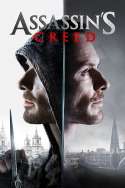
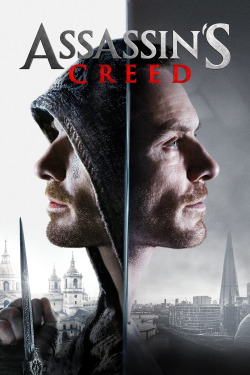
When Assassin's Creed was in the lead up to its release, it certainly seemed the film was primed to break the video game adaptation curse. Re-teaming Michael Fassbender and Marion Cotillard with director Justin Kurzel after the trio collaborated on 2015's Macbeth, it seemed a match made in heaven. One of the best films of 2015, Macbeth is so good that I loved it in spite of the stream having Chinese subtitles, which only worsened the fact that all of the characters had thick Scottish accents while spitting out Shakespearean English. It was hell, but a beautiful one at that. Assassin's Creed further establishes Kurzel as a brilliant visual director, but Assassin's Creed just seems to clunk along far too often and, as a result, its climax lacks the requisite power to make it all work together.
Based on the greatly popular video game series of the same name, Assassin's Creed introduces the concept of the Animus. Transporting its occupant to the past life of a direct ancestor, the device is being used by Sofia (Marion Cotillard) and her father Alan (Jeremy Irons). Attempting to find the Apple of Eden - in which the seeds of mankind's first disobedience were sown and where the key to controlling humanity's free-will is said to exist - the two find men and women with a link to a member of the Assassin's Creed, a group of assassins sworn to defend the Apple. By putting them into the Animus, the men and women experience events as seen and performed by their ancestors, which can lead to clues as to where the Apple is located. However, with Callum Lynch (Michael Fassbender), they have their best opportunity. A direct relative of an assassin named Aguilar who operated in 1492 during the Spanish inquisition, he was the last man known to have possessed the Apple of Eden. Now, it is up to Callum to find out where he hid the apple. However, with Alan working for the Templars - the group that orchestrated the Inquisition and still seeks to control humanity - Callum and the other assassins must try to use their knowledge of where the Apple is to try and prevent the Templar from being able to use it against humanity. In other words, this film is complex.
Where it falters the worst, however, is the scenes in the modern day. Compared to the exciting sequences in 1492 Spain, the scenes in the modern day suffer from being both too long and too rushed. Dialogue, especially what is written for Moussa (Michael K. Williams), is always clunky. Scenes are either too exposition heavy and, thus, drag or they are too short and never really explain what is going on. For example, when the inmates revolt against Sofia and Alan while Callum is in the Animus, it is unclear throughout the sequence what is happening with no moment where they seem to plan it all out together. Instead, they are shown to be trying to kill Callum only to then fall in line and take orders from him shortly after. Aside from a brief bridge scene with his father Joseph (Brendan Gleeson), there is no moment where we see them all decide to revolt and then work with Callum. It is very odd and shows how underwritten some parts of the film are, compared to how overwritten moments of exposition are.
Where the film's rushed nature really hurts it is in the climax of the film. With the Templars possessing the Apple immediately after Callum revealed where it was, the scene of them finding the Apple is about ten seconds long. The whole film is about them to finding the Apple and when they finally get their hands on the thing, the film opts to just rush through everything leaving the film itself feeling abrupt, only worsened by its ending that is equally rushed and left open for a sequel. With the Templars celebrating their success and the Assassins interrupting, the scene of Callum and Alan in their final moment together happens in two seconds and lacks any sense of power or presence. It just happens and everybody moves on without reacting to what they just witnessed. The abrupt ending immediately after only worsens this with the film lacking a satisfactory ending in the name of setting up a sequel.
Yet, Assassin's Creed practically saves itself with the scenes in the Inquisition. Unique, engaging, and steeped in mythology, the scenes are absolutely excellent from a story perspective. Action-wise, the scenes feature the film's greatest fight choreography with an excellent usage of hand-to-hand combat, sword fighting, and improvisation with nearby elements on the set. Each fight scene is excellently staged and shows Kurzel's adeptness with battle scenes, as he had previously demonstrated in his debut, Macbeth. Both films really crescendo with their gorgeous action sequences and the scenes in this film nearly make up for the lack of power and intrigue found in the moments set in the modern day.
This review of Assassin's Creed (2016) was written by Spangle on 03 May 2017.
Assassin's Creed has generally received mixed reviews.
Was this review helpful?