Review of Apocalypto (2006) by Shaheen R — 25 Apr 2017
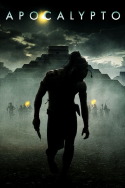
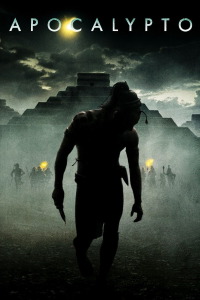
How do you frame politics, religion, survival, family, civilization and action, that all coalesce brilliantly, in a span of 138 minutes? Mel Gibson pulled off the impossible by directing the epic adventure film Apocalypto (2008) that is set in the year 1511 during the peak of Mayan civilization. Starring Rudy Youngblood as Jaguar Paw, the main protagonist, Apocalypto deserves a straight rating of 5/5, not because of my fascination towards ancient civilizations, but due to the way it depicts the Mayan civilization and how it symbolizes the political downfall that led to the self-destruction of the civilization in reality.
The film revolves around the survival adventure of a young tribal male, Jaguar Paw, from an isolated village embedded in the thick forests of the Yucatan Peninsula. Jaguar Paw with his wife is expecting for a second child as he lives the 'jungle life' with other fellow tribesmen, hunting down animals, setting up a campfire and enjoy storytelling with his family. However, he is unaware of the danger that would fall upon his untroubled life, as one night, the village is raided by a group of Mayan hunters who capture him and other tribesmen. Leaving his pregnant wife and child stuck in a pit cave, Jaguar Paw endeavors a journey into the great Mayan city. As Jaguar Paw proceeds through the city, he observes the cruelty, torture, slavery and wickedness widespread in Mayan people. He soon realizes that himself and other tribesmen are taken as captives to be sacrificed on a Mayan ziggurat in front of a huge crowd. The sacrifice is meant to please the Mayan gods who recently struck the country with famine and also to plead to the gods for the prosperity of the Mayan civilization and their king. However, Jaguar Paw is spared from the sacrifice when a solar eclipse forms which the Mayan people interpret as an atonement from the gods. As an alternative, Jaguar Paw and other tribesmen were used as target practices where they were allowed to escape only if they manage to dodge arrows and spears. Only Jaguar Paw manages to escape into the dense jungle while being chased by several hunters. After striving for survival and search for his family, Jaguar Paw eventually reunites with his wife and now two children and begin a new life. The ending shows Jaguar Paw observing some Spanish conquistadors as they anchor off the shore.
What interests me the most is how the film portrays several aspects of the Mayan civilization. The Mayans are often considered as a civilization that led to their own destruction. Certain scenes in the film depict the Mayan lifestyle that involves environmental degradation as shown by the deforested outskirts of the Mayan city, political corruption as shown by human sacrifice, slaves being sold in markets and distinct differences in Mayan caste system. These scenes are politically effective in that it replicates a political scenario where belief in a certain political ideology could be detrimental to the entire community. The Mayans believe in several gods and consider the king as one who communicates with gods, a form of ancient monarchism. Their beliefs were indeed ignorant and naïve such that it brought nothing more than disaster to their lives. This is contrasted with socialism as illustrated in the tribe of Jaguar Paw where tribesmen hunt and gather together as a community. But how is this underpinned in certain scenes of the film?
Here comes the use of 'form' which includes the film's codes of cinema, poetic metaphors and other visual aesthetic that constitute at representing the aforementioned film's politics. The demise of Mayans is metaphorically illustrated by the very presence of famine, corruption within society as well as the arrival of Spanish Conquistadors. The rise in socialism is expressed when Jaguar Paw decides to start afresh with his wife and two children to live the socialist lifestyle similar to that of his former tribe. Furthermore, the film often highlights the hegemonic brutality of the king, especially during the sacrificial procession scene. It shows how Mayans are blinded by their belief in the monarch and their religion when the priest utters blarney about their superiority over other beings. In a Marxist sense, the king and other priests mystify their false authority over citizens using religion as a tool to blindfold them. This is expressed in the sacrificial scene when the people raise their hands towards the king as a form of pledging their loyalty. The entire scene and setting is shot such that it visualizes the authority of monarchism and its dominating despotism over misguided civilians. For example, the shot below shows a captive beheaded in front of the crowd which is taken from an angle that displays the top of the ziggurat and a wide view of the Mayan city. The shot represents supremacy of the monarch over a huge population.
Moreover, the vibrant atmosphere of people in the sacrificial scene just shows the potential of manpower inherent within the Mayans that is being used unnecessarily for false ideologies (monarchism) rather than for communal gains (socialism).
On a further note, this implies that the film doesn't portray the Mayan demise and rise in socialism in a straightforward manner but only represents them through the 'form' itself. A person watching obliviously would conclude that the film features Mayans as prosperous and other smaller villages as victims of Mayan dominance. Nevertheless, when paralleled with reality, it becomes quite clear that the film attempts the exact opposite i.e. to depict the futility of monarchism and importance of socialism, through exceptional use of 'form' (how it is portrayed cinematically).
Another great feature of the film are the costume designs and location settings. Everything was ideal to accurately depict the Mayan civilization. The costume for each individual is spot-on as well as the location of thick forest for escape scenes that depicts a very realistic, historically accurate adventure of a tribal protagonist. The Mayan language used throughout the film also adds to the realistic picture which collectively enhances the audio-visual perception of the protagonist's struggles. It is as if the audience could connect to the feelings, views, and perspective of Jaguar Paw and endeavor along with him passed the hunters through the thick jungle to reunite with his family.
In a nutshell, the film is a must-watch for all and deserves a great deal of approbation. It amalgamates politics, religion, survival, family, civilization and action all into the adventure and survival of a single tribal male. The way it represents the Mayan people, their culture and demise are? truly remarkable and compelling to watch; hats off to Mel Gibson, Rudy Youngblood and everyone involved in this spectacular piece of artwork!
This review of Apocalypto (2006) was written by Shaheen R on 25 Apr 2017.
Apocalypto has generally received very positive reviews.
Was this review helpful?