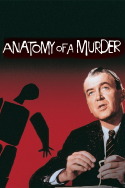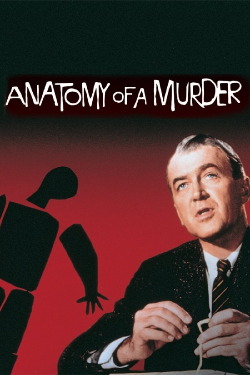
Review of Anatomy of a Murder (1959) by Cameron J — 13 Apr 2013
160 minutes, this film better actually give me a detailed study on the process of murder on a cellular level that dissects the mentality of a killer. ... Oh yes, because that would be infinitely less boring than a little bit of filler around the edges of a juicy drama. If this film doesn't tell us that you can pull off really long legal dramas, then it's Oliver Stone's "JFK"... as well as "A Few Good Men", F.F. Coppola's "The Rainmaker", "The Firm", "Amistad", "A Time to Kill", "Judgment at Nuremberg", Nikita Mikhalkov's "12" and "...And Justice for All", which feels like it runs somewhere between 130 minutes and two-and-a-half hours. Jeez, people, I know you're able to find plenty of material outside of the courtroom to sustain a hefty length, but for goodness' sake, at least make an attempt at tightening things up. Hey, maybe this film has earned the right to be overlong, not just because Otto Preminger was nothing if not a man who knew a thing or two about making really long films (Dude, why did it take Paul Newman three-and-a-half hours to get around to occupying a boat, then going on a small-scale military mission in "Exodus"?), but because it's audacious enough as an extensive discussion on rape and murder in 1959, which is why it's a masterpiece... I guess. Yes, critics, I know that this film was edgy when it first came out, but forget nostalgia, I just want this film to be good on a general standard. Well, in that case, it's a good thing that this film is, in fact, quite good, though this effort would be even better if it wasn't guilty of making some mistakes.
This talkative thriller has plenty of time to flesh out the depths of its substance, and certainly does do a generally decent job of breathing life into development in certain spots, though not as many as there probably should be, thus making for an exposition-driven drama that doesn't wholly fulfill its expository potential, and leaves enough holes in substance to feel kind of undercooked to the point of slowing down momentum, though not as much as the atmosphere's, well, actual slow spots, of which there are more than I expected. The film is adequately entertaining, but when things slow donw, as they very often do, while dullness never ensues, momentum limps out pretty considerably, and atmosphere dries up just as considerably, blanding things up to a disengaging point that very rarely, if ever leaves the film to dip its toes in underwhelming waters, but decidedly throw things off. Films this talkative need to be careful if they're going to slow down and dry up, and luckily, this film doesn't limp out so often that it falls flat as consistently bland, but there are bland spells, and they retard kick, or at least assist padding in retarding kick. With all of my talk about how this film, at a whopping 160 minutes, is too long, this somewhat minimalist story's execution's relatively sprawling runtime is not simply highly unexpected, but highly unnecessary, being partially achieved through material that outstays its welcome, often going so far as not simply bloat, but tread circles. This film's formula is too tight for the final product to be as lengthy at it is, rarely doing anything outside of building information outside of the courtoom, then dissecting the information found earlier within the coutrtoom, and such a formula, while backed by enough juice to compel through and through, can be drawn out for only so long before it begins to slip into repetition, and sure enough, it doesn't take long for the dynamicity of this over two-and-a-half-hour dialogue drama to grow thin. Whether it be because repetition isn't as severe as it could have been, or simply because compensation for shortcomings is reasonably strong, this film keeps you going as genuinely gripping, but there are nonetheless moments in which grip loosens, occasionally thanks to lulls in exposition, and mostly thanks to bland bloating that could have driven this promising effort into underwhelmingness. Needless to say, underwhelmingness does not claim this film, which is flawed, most certainly, but boasts even more strengths, even within the underexplored musical aspects, which, in all honesty, aren't entirely cleansed of their own issues.
Arguably lengedary musician Duke Ellington composes a score for this film that is not used too often, and often has its share of issues when it does, in fact, finally show up, having a lively jazziness that is hardly all that dynamic, and doesn't always gel with this film's conceptually heavy subject matter, but more often than not, Ellington's efforts, when heard, throw in a worthy color to this film that reinforces entertainment value and, to a certain degree, artistic integrity. Even more explored and fitting artistic touches include, of course, Sam Leavitt's cinematography, which, in all honesty, isn't too terribly striking, even for the time, but was still impressive for its time, and has sustained impressiveness throughout the ages, playing with black-and-white limitations of the '50s through clever lighting that graces visuals with a kind of bleak depth that compliments the intrigue of this subject matter, and sometimes proves to be fairly handsome by its own right. Both the musical touches and photographic efforts behind this film play an adequate role in livening up the telling of this tale, though not too large of a role, as the film's more stylish aspects feel a bit underexplored, both in terms of quantity and in terms in richness, thus substance must sustain itself primarily by its own hand, which, of course, makes it a good thing that this film's substance is so valuable. It's not like this film's subject matter is all that unique in concept, and it's not like the ultimate telling of this story is all that smooth, having undercooked spots and relatively limp spells, though not so many that you don't still get a pretty firm grip on the intrigue of this story, because we are dealing with fairly promising material that some filmmakers of the '50s probably could have brought to life more, but wouldn't be done as much justice by most '50s filmmakers as it is in this film, largely thanks to Wendell Mayes' script. Sure, the censors had to draw lines somewhere, so we're not really looking at a legal thriller that is as unapologetically mature in its dialogue as something along the lines of "JFK", but when they say that this film, for 1959, got to be pretty edgy with its references during the courtroom sequences, they weren't kidding, as there is some down and dirty talk in the discussions pertaining crimes as brutal as rape and subsequent vengeful murder that are not too shocking in this day and age, but were daringly made at the time so that this film could break down barriers and further flesh out its story's depths, and such flesh-out, unlike shock value, can never be taken away from the final product, whose audacious and extensive exploration of its depths as a legal thriller is still not too terribly profound, but just insightful enough to create some well-rounded thrills in the dialogue department, thus putting some degree of reinforcement behind unevenly distributed exposition, which is further complimented by believable characterization that is itself complimented by pretty strong portrayals behind most every major note to this film's character roster. Whether it be the subtly soulful George C. Scott, or the lovely Lee Remick, or the charismatic James Stewart, most everyone has his or her opportunity to command your attention and breathe some life into this film's depths, though not as much as a certain offscreen performance, because without the inspiration of Otto Preminger, the final product would have collapsed as underwhelming. Preminger's efforts aren't too outstanding, but when his storytelling hits, it grips, sometimes with dramatic intrigue, sometimes with a bit of tension, and consistently with a soul that may not be able to obscure this film's flaws or predictable spots, but manages to grip you, for although there is no getting around this film's behind flawed, Preminger, backed by worthy writing, acting and other touches, drives this courtroom drama as genuinely rewarding.
When the case is closed, the film is left wounded by some underdeveloped spots, and takes some serious damage from slow spots that intensify the sting excessive padding, which eventually inspires the repetition that could have driven the final product into underwhelmingness, but doesn't, as there is enough fair liveliness to score work and cinematography, audacity to writing, compellingness to writing and inspiration to direction to subtly, but surely sustain intrigue through and through, and make "Anatomy of a Murder" an intriguing legal drama that could have slipped from bonafide goodness, but makes up for its mistakes enough to reward as compelling, maybe even reasonably worthwhile.
3/5 - Good.
This review of Anatomy of a Murder (1959) was written by Cameron J on 13 Apr 2013.
Anatomy of a Murder has generally received very positive reviews.
Was this review helpful?