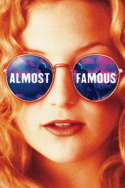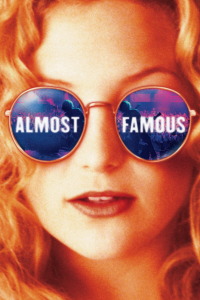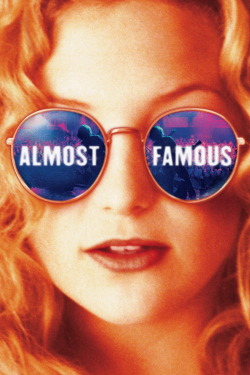
Review of Almost Famous (2000) by Kylie P — 01 Nov 2010
Almost Famous is a likable film that works because it's clearly a labor of love for writer-director Crowe. Having lived what William lives in the film, Crowe credibly infuses young Fugit with that same wide-eyed innocence turned awakening that he clearly experienced when he was playing the part of the rookie journalist himself, touring with some of the best acts of his day. It's the self identification that lends the film a modest sincerity and instant connection with the viewer. From William's perspective, everything is new, scary, and brimming with possibility, even as some of the world in which he finds himself is weather-worn, ugly, and challenging, a perspective that anyone can identify with if adolescence in general is a current or past experience.
The film is also likable because of the various performances it boasts, courtesy of some spot-on casting and consummate dramatic skills. Fugit is winningly adorable as young William, bringing a level of naturalness to the proceedings. McDormand is hysterically touching as his worry-wart mother, vacillating between allowing her son to find his footing in the world while trying to protect him from its less attractive truths. Hudson plays a sweetly knowing Penny Lane, not yet a woman but no longer a girl, already stripped of the innocence William carries in spades but unwilling to let life's harder lessons bring her down, until Russell affects his most disaffected rock-star demeanor. Everyone in the band, including Jason Lee as the singer and Jimmy Fallon as a replacement manger, brings subtle and not-so-subtle humor to the film. Hoffman contributes his usual intensity to his small part. The entire ensemble, a myriad of actors' actors, work well together to offer a glimpse into an unsurprisingly difficult lifestyle and to help emphasize the notions that dreams sometimes come with a price, and that growing up is, at all times, hard to do.
Almost Famous also boasts a killer soundtrack, featuring nods to all sorts of great 70s rock and passable Stillwater tunes composed by the likes of Peter Frampton and Crowe's then-wife Nancy Wilson (of Heart fame). In some ways, the story seemed to service the soundtrack at times rather than the other way around, which detracted from the cohesion of the tale somewhat. Yet, with a soundtrack as great as this compilation, such co-dependency on the music may not totally constitute a flaw, particularly when William's raison d'etre is his passion and yearning to celebrate the very rock music about which he writes. Add to that some great costumes and charmingly detailed art direction, and it's not hard for the viewer to come along for the trip back in time, when a character like William could, relatively safely and believably, embark upon such a journey.
Still, the film, as enjoyable, engaging, and entertaining as it was, suffered from a fuzzy quality that undercut its focus. It's unclear, in the end, what William takes away from his experiences and what purpose the entire process truly serves for his maturity into manhood. In fact, the Russell character boasts the most significant progression, in large part owing to the character's exposure to William's idealistic innocence, but Russell is not the person with whom the viewer is meant to identify. Also, despite lying to Rolling Stone and being exposed to all sorts of new and dangerous experiences, no explanation is provided about what consequences William incurs for his unorthodox trip, other than his obvious exhaustion. This is one of the rare films where a footnote at the end providing a bit more closure for the William character might have been a benefit, since he is the center of this universe, even if the film's title refers to just about every character in the film. Also, as William's idealism permeates the atmosphere of the film in general, Almost Famous almost feels like a nostalgic romanticist's homage to a bygone chapter of his life rather than a true coming-of-age story that places any emphasis upon the pains of growing-up. It's Penny and Russell and Stillwater that experience these pains, and while William considers and internalizes what he observes, and though he is the autobiographical archetype for the film's auteur, Crowe stops short at showing the viewer what it all means to him in the end, other than via the lens of that hazy, rose-colored memory. Perhaps, Crowe wanted to leave the film's significance open ended, to invite the viewer into that happy era of his adolescence for the purpose of walking away with his/her own interpretations. In the end, however, the film felt modestly insincere, save for Fugit's naturalness, and almost censored of the true angst of maturation, even despite all of the sex, drugs, and rock 'n' roll.
In any event, while Almost Famous may lack a particular depth, it's still a fine film that is earnest in its celebration of music, life, love, and in its exploration of human connections, from free to not-so-free spirits, from aspiring rock journalists to rock 'n' roll aficionados. If nothing else, the screenplay is wonderful and contains some brilliant bytes of philosophy centered on when Crowe allowed his characters to fall from the tightrope between dreams and reality and to actually reach an understanding, if unhappy, of the world they are facing. Particular scenes that radiate this quality, the quiet scenes between William and Penny or between William and Russell, are when the film is at its finest and most poignant. Still, this is definitely one of Crowe's better efforts, and the viewer who enjoys this genre and era of music or who wishes to reminisce about cultural attitudes of the day, or who appreciates a decent coming-of-age story, will definitely relate the most to Almost Famous.
This review of Almost Famous (2000) was written by Kylie P on 01 Nov 2010.
Almost Famous has generally received very positive reviews.
Was this review helpful?