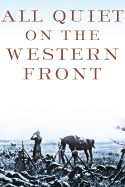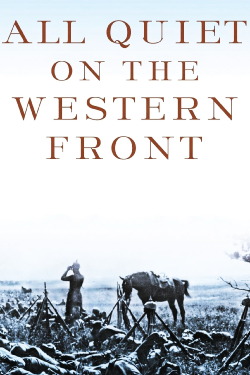
Review of All Quiet on the Western Front (1930) by Lauren D — 04 May 2010
This film is well deserving of its 1930 Best Picture Oscar. Its set-piece battles are very well achieved with state of the art special effects (for the day). One of the first films to showcase the genuine horrors of the Great War of 1914-18, it was banned in Germany as unpatriotic, as the nation aggressively rearmed for the next world war.
Its depiction of the profoundly psychologically disturbing effects of battle on soldiers, their fear in the face of battle, their sympathy for the enemy, and their cynicism about the futility of war was seen as bad for the national morale.
The image of a severed arm swinging on barbed wire, though glimpsed for only a fleeting second, leaves a striking impression and is indicative of the fine level of detail achieved. Though an American film, the war is seen entirely from the viewpoint of the German soldiers who are its protagonists.
Though at first the American accents are jarring, they probably had the desirable effect of giving American audiences greater sympathy for the German soldier, who was after all, not very unlike his American counterpart, caught up in a war he didnâ??t really want or even understand.
The butterfly and the helmet that are the focus of the final tragic scene form one of the great iconic images of the war movie genre, effectively juxtaposing the gentle and the barbarous. One of the truly great films of the 30s and probably one of the top ten war films of all time, this one is highly recommended.
This review of All Quiet on the Western Front (1930) was written by Lauren D on 04 May 2010.
All Quiet on the Western Front has generally received very positive reviews.
Was this review helpful?