Review of All Is True (2018) by Bertaut1 — 21 Feb 2019
A strangely formless and insubstantial love-letter to Shakespeare.
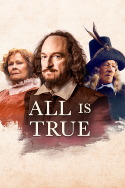
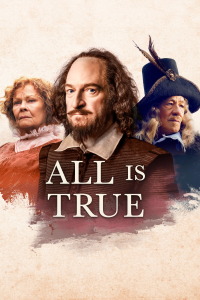
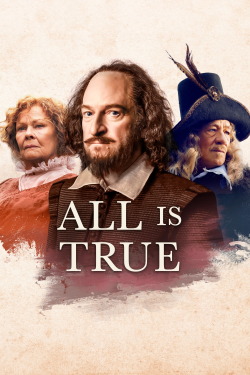
Directed, produced by, and starring Kenneth Branagh, All Is True is a pleasant enough film obviously born from great reverence, but is also clumsily episodic in structure, and relatively free of conflict, focusing instead on non-incident. By the very nature of the years during which it takes place (1613-1616), Ben Elton's screenplay is full of interpolations and suppositions, some of which are interesting, but many of which don't work. There's a much better film hidden in the contours of All Is True, a darker story examining Shakespeare's (Branagh) psychology; his inability to process the death of his son Hamnet (Sam Ellis), his guilt over the fact that he put his career ahead of his family, his possible misogyny, his obsession with his legacy. These issues are in the background, but they are not the focus, and whilst All Is True is perfectly fine, it's also perfectly forgettable.
Possibly a palette-cleanser for Branagh, allowing him to return to the familiarity of Shakespeare, after several years working on relatively impersonal projects, and with two blockbusters on the way, All Is True begins on June 29, 1613, as Shakespeare watches the Globe Theatre burn to the ground, after a canon misfired during a performance of All Is True. Devastated, he retires and returns home to Stratford. Coldly received by his wife Anne (Judi Dench) and youngest daughter, Judith (Kathryn Wilder), he gets a slightly better welcome from his eldest, Susanna (Lydia Wilson). Still mourning the death of Judith's twin, his only son, who died from plague aged 11 in 1596, Shakespeare decides to grow a garden to honour his memory. However, he must also try to deal with Judith's hatred for him, stemming from her conviction that he believes the wrong twin died.
Easily the best in the film, involves Henry Wriothesley, 3rd Earl of Southampton (Ian McKellen) visiting Stratford. Discussing his identity as the "fair youth" to whom Shakespeare addresses the first 126 sonnets, Shakespeare quotes in its entirety Sonnet 29, with Branagh reading it as an agonised ode to an impossible love. Southampton then also recites the poem, with McKellen's intonation changing it into a celebration of the power of art to transcend such foolish distractions as love. It's a beautifully shot, incredibly well acted, and nuanced scene that, if it accomplishes nothing else, serves to remind us just what talented actors can do when reciting the exact same text.
One of the film's main themes is, of course, family, with Elton's script focusing on how resentful Anne and Judith have become of Shakespeare. We don't know a great deal about the real Judith, so much of Elton's characterisation is speculative. The film's Judith is a protofeminist, a brilliant woman railing against the narrow-minded patriarchy her father endorses. The likelihood of this being the case is slim at best, but Wilder is excellent in the part and makes Judith much more believable than the character has any right to be. The film acknowledges that Shakespeare was a neglectful father and husband, and never fully gets behind him as he defends himself by citing the cultivation of his genius. However, by the end, even he doesn't believe this himself, coming to understand the price his family paid for his greatness.
However, there are some considerable problems. First and foremost is the script, which employs an extremely episodic organisational principal, with scene after scene addressing one and only one issue at a time, ensuring each issue is cleared before moving onto the next. Scenes often involve the characters saying only what is necessary to get to the next scene, with little room to breathe, almost as if we're watching a "previously on" montage of a TV show.
The casting is also problematic. Now, don't get me wrong, I love Dench and McKellen as much as the next man, but that doesn't change the fact that they are both badly miscast. Both play their characters as elderly, but in 1613-1616, Anne (played by the 84-year-old Dench) was 57-60, and Southampton (played by the 79-year-old McKellen) was only 40-43. Additionally, Anne was six years older than Shakespeare, but Dench is 26 years older than Branagh, and it shows, serving only to distract from the content.
As a Kenneth Branagh fan (and a fan of Ben Elton's Upstart Crow (2016)), I was disappointed with All Is True. The film tries to strike a balance between a laid-back and wistful story about a retired writer, and a study of filial grief. Some elements unquestionably work; the Southampton scene, Shakespeare's struggle to reconcile his genius with the personal cost of that genius, Judith's resentment of Hamnet. But a lot doesn't work. It's an inoffensive and perfectly fine film, but given the director and the subject, it could, and should, have been so much better.
This review of All Is True (2018) was written by Bertaut1 on 21 Feb 2019.
All Is True has generally received mixed reviews.
Was this review helpful?