Review of All Is Lost (2013) by Cameron J — 02 Mar 2014
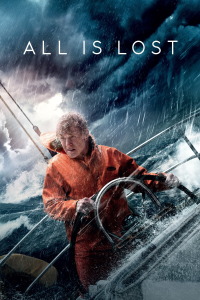
That title is kind of lazily thought out, but you have to give it credit for simply being blunt about how kind of harsh this film is, because, make no mistake, there's no delightful volley ball sidekick to get you by in this film. Well, I don't know if all is truly lost, because we've at least found Robert Redford, who is probably so blasted good in this film because he just got back from his own experiences of being trapped at sea, or wherever he's been since "Lions for Lambs". I'd say that there is some jerk out there who says that we actually saw him recently in "The Company You Keep", but I'm sure I'm that one jerk who remembered that "The Company You Keep" exists, because there is more talking in this film than there is of that film. ...Perhaps I should clarify that this film hardly has any dialogue at all, outside of an opening narration and couple throwaway words, including a certain memorable one that I would probably say if I was in this situations, even though I'm not usually one to say it. Man, looking at my self-censorship, I'm such a wimp that I probably wouldn't last out at sea long enough to say the word in question. Well, rest assured that it sums up this film more than the actual line, "All is lost". Well, maybe that line isn't too far off, because as much as I very much like this film, your attention is bound to get lost at times.
Its ambiguity practically a novelty in its celebration, the film pretty much says nothing about the background of its lead, whose struggle for survival would be more immersive if we knew a name or an origin of the conflict, or, well, if much of anything was literally said in this almost silent study on an undeveloped character of only so many layers. Without exposition, and with only so much dialogue, this film sees limitations in acting material for Robert Redford, lapses in material dynamicity, and, worst of all, a sizable riff between you and a nameless central who is well-portrayed enough to be compelling, and whose conflicts are well-handled enough to get you pretty well-invested, yet is secured far from as compelling as a Chuck Noland or an Aron Ralston by admittedly unique, but questionable directorial limitations in expository material. Needless to say, limitations in material for all of J. C. Chandor's meditative storytelling to draw upon leave thoughtfulness to quickly devolve into dryness, for although there's enough realization to Chandor's writing and direction to keep engagement value consistent, with engrossing highlights, pacing is blandly stiffened by a quiet meditation upon only so much material, making it hard to not question the overall length of the drama. I suppose there are enough subtle dynamic touches to the set piece drawing and slightly layered storytelling to keep repetition from becoming out-and-out monotony, but make no mistake, repetition does most certainly stand in this very, very minimalist film which comes out at about 15 minutes shy of two whole hours, and gets there on the wings of aimless set pieces that, in the place of actual exposition, retard momentum something fierce in this overambitious meditative piece. Yeah, ambition is plentiful in this offbeat drama, as you can imagine, and no matter how much of that passion is focused into legitimate inspiration, the attempts to do more with less often end up doing only so much, with one of those deeds being calling your attention just how little there is to work with when it comes to subject matter of this type, for although these survival films have had a surprisingly solid success rate through the years, there have always been natural shortcomings, and that especially goes for this particular bottle drama. A vehicle for minimalist writing, meditative direction and atmospheric acting, this film succeeds on just about all the levels it needs to in order to reward, but it just cannot hope to stand out while it stays so minimalist, quiet and overdrawn, ultimately "sinking" shy of its potential. Of course, by no means is thorough engagement value is itself lost, as most all questionable moves are reasonably compensated for by inspired moves, even those in, of all places, the musical department.
Now, when I say that the score by Alex Ebert, the mind behind Ima Robot and Edward Sharpe and the Magnetic Zeros, is unevenly used, I mean that it's abandoned for long, long periods of time for the sake of keeping things as naturalist is they can be, then popping in from out of nowhere, often where you least expect it, and when it does finally come into play, it's neither especially dynamic nor, for that matter, pronounced, and yet, it is still aesthetically outstanding, with a hauntingly dreamy quality whose atmospheric depth is not only remarkably beautiful, but complimentary to the core of this almost ethereal drama. While dry, this score actually helps tremendously in keeping dullness at bay with its subtle, but no less considerable effectiveness as a stylish amplifier of atmospheric kick, although it's a luxury you only get so much of in a film that, in order to grip, must use its, at the very least, minimalist writing effectively. Oh yes indeed, J. C. Chandor's script is minimalist, abandoning exposition and even much dialogue, yet still retaining plenty of repetitious excesses in material, so it could have seriously put a damper on the final product's overall reward value if the mistakes weren't matched by inspiration, which tightens up more than a few vividly drawn set pieces enough for you to get a feel for urgency through thoughtfulness, truly brought to life in an equally inspired directorial performance. Survival dramas, as I've said time and again, really thrive on the subtle touches which can go a long way in directorial storytelling, and only go so many places if not handled with full realization, and where last year's "Life of Pi" got too carried away with flashiness to be nearly as outstanding as the also stylish "127 Hours", this film gets to be too subdued to be nearly as outstanding as the also meditative "Cast Away", yet, as you can imagine, a film this meditative would have sunk much more deeply as relatively disengaging if Chandor wasn't so inspired as a storyteller whose thoughtful celebration of anything from subtly dynamic visuals to the aforementioned tender score work keeps a consistent degree of aesthetic and narrative intrigue intrigue, if you will, "afloat", and, quite frankly, really resonates with tension and raw emotion once the meditativeness is applied to heights in dramatic material. Subtlety is, of course, a big aspect in this almost wordless, very visual and all around intimate character drama, and such subtlety to this degree can either destroy a film or drive it pretty triumphantly, and while the direction is still not quite stylistically biting or immersive enough to stand out with the likes of "Cast Away" or "127 Hours", inspiration never seems to abate in the offscreen performances by Chandor that match draggy structuring with a rich feeling of depth and light layering that draws you in and often shakes you up, yet wouldn't be so effective if it wasn't so firmly driven by Robert Redford. Constantly working to survive, Redford's unnamed character doesn't have a whole lot of time to sit back and let the humanizing emotions wash over him in order to fully make up for characterization shortcomings, let alone allow Redford to soar as much as I really was hoping he would, so don't go in expecting one of the best lead performances of the year, yet do go in expecting one of the better ones, because as underwritten as Redford is in this film, he effortlessly exudes this atmosphere which combines confidence and anguish in order to sell the layers of frustration and hope in the person who is simply known as "Our Man", punctuated by expressive, if not blunt emotional bursts that remind us of the legendary actor's range, while driving distinct highlights in dramatic effectiveness. This is a one-man show, and Redford carries it every step, row and stroke along the way, with enough conviction for you to all but forget about how underwritten the audience avatar is and become truly invested, maybe not to where you're looking at an all around great performance, much less an all around outstanding minimalist drama, but certainly to where Redford joins his efforts with those of Chandor with enough mutual inspiration to compel pretty thoroughly pretty much consistently.
When all truly is lost, the film washes up shy of its potential, anchored down by distancing limitations in exposition, dialogue, atmospheric kick, structural tightness, and conceptual meat, but still driven far enough by haunting score work, smart scripting, thoughtful direction and a driving, if underwritten lead performance by Robert Redford for J. C. Chandor's "All Is Lost" to stand as yet another flawed, but ultimately compelling meditative survival drama.
3/5 - Good.
This review of All Is Lost (2013) was written by Cameron J on 02 Mar 2014.
All Is Lost has generally received positive reviews.
Was this review helpful?