Review of Alice Through the Looking Glass (2016) by Douglas M — 31 Dec 2016
Sequels may be a mainstay of the movie industry, but they are also a precarious proposition. Traditionally, sequels have a reputation for being a pale echo of the original with a few notable exceptions. The latest sequel from the Walt Disney Studios, 'Alice: Through the Looking Glass,' unfortunately, is unable to change that general perception, it barely manages to hold together as a story. Over the years there have been numerous interpretations of the classic literary works of Lewis Carrol. In 2010 the eccentric filmmaker, Tim Burton created his vision of 'Alice in Wonderland,' featuring an impressive all-star cast and a stunning a 3-D video presentation. Now, six years later the companion piece, 'Alice Through the Looking Glass' has received similar treatment. The reception for the first film was lackluster but still managed to hold together better than its sequel. In many occasions when migrating Carrol's words to the screen, the pair of books was combined. The alternative was to present only one-half of the story as a full movie. It is always a disappointing when a beloved literary classic, especially one integral to the childhood of so many, significantly fall short of expectations. Such unspectacular critical appraisal the only justification the Walt Disney Studios had producing this sequel is that 'Alice in Wonderland,' provided a substantial return on the investment. Thankfully, Lewis Carrol limited his excursions into Wonderland to just two installments when combined with the financial loss inflicted by this movie fans of the books can rest assure the talented Mr. Burton is guaranteed to move on to other projects. In an attempt to be optimistic, Wonderland films were a natural fit with Tim Burton. He has built his career on his imaginative implementation of his visual style. It is almost as if Lewis Carroll in Tim Burton augmenting their creativity with the same psychogenic substances. Releasing Mr. Burton from the confines of reality did provide a rare treat for the eyes of the audience. Burton's experience with stop action modeling also provided him with a suitable experience necessary for creating 3-D compatible storyboards. While the magical whimsy of the story itself did not translate well to the large screen, technology has finally caught up with the surrealistic images created in the mind of a 19th-century author.
This story picks up some three years after the conclusion of Wonderland. Alice Kingsleigh (Mia Wasikowska) has been living the dream she shared with her father, selling to ports around the globe, exploring the world. Upon returning to London after the excursion in China Alice discovers that her ex-fiancé, Hamish Ascot (Leo Bill) has been busily acquiring all of the assets owned by Alice's father. Hamish has managed to leverage a substantial portion of the base Kingsleigh fortune sufficient to style himself among the peerage as Lord Ascot. Hamish commits an act of pure spite; he forces Alice to choose between keeping the family home and retaining ownership of her father' sailing ship. Overwhelmed by indecision Alice flees encountering a butterfly who turns out to be Absolem (voiced by Alan Rickman), previously known as the hookah-smoking caterpillar. The shows Alice a mirror in one of the upstairs rooms of the family home which will facilitate rate back Underland. Passing through the portal Alice is greeted by a many of friends including Mirana of Marmoreal, the White Queen (Anne Hathaway), Nivens McTwisp (voiced by Michael Sheen), the White Rabbit and The Mad Hatter (Johnny Depp). The Hannah has been of poor health recently resulting from his father, Zanik Hightopp (Rhys Ifans), a hat retailer, going missing after the battle Alice defeated the Jabberwocky. This seems to be no help save the Hatter and his family White Queen does have one idea. Alice has to locate and convince the personification of Time (Sacha Baron Cohen), after the past and thereby negating the misfortune Hatter's father. Time is a godlike entity is part-human, part-clock. But Alice arrives at the dismal area where Time resides the Chronosphere, an object that powers all time in Underland. By using it, Alice can travel through time back to the pastor hopefully change what happened to the Hatter's father. The Queen warns Alice that the past is fixed, unalterable. Adding to the danger of mission has to avoid meeting her past self. If past-Alice and Alice were to meet everything would be history the devoid of present and future.
Alice returns to the point in the past to the coronation of Iracebeth of Crims, the Red Queen (Helena Bonham Carter). A younger Mad Hatter mocks her because her hat is far too small for the oversized head. Iracebeth quickly psychologically decompensate into uncontrollable fits of madness causing her father to Dean that she is not fit to rule. Our younger sister Miranda is given the throne instead. Searching for the cause of such vehement sibling rivalry Alice corresponded back into the past. Both sisters were children. Miranda steers a taught from her mother and eats it. When questioned as to the missing dessert Miranda denies her actions and blames her older sister, Iracebeth. Alice notices that Iracebeth is about to run headlong into o'clock. Feeling that this is the moment with her head and personality of the formed Alice tries to intervene but instead causes the child queen to fall and injure her head on the floor. When confronted by Time entering the timeline Alice Pattison runs back to the mirror to the real world. She finds herself back in a mental institution confined due to a diagnosis of female hysteria. Not only did the warning about the dangers of changing the past affect the events it Underland but as Alice discovers their dire consequences in the real world as well.
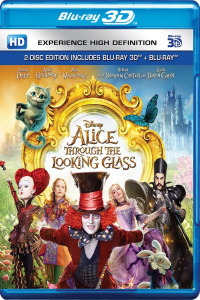
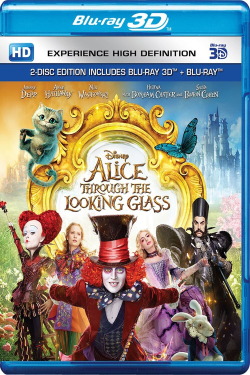
Under the best of circumstances a story that based upon time travel in the alteration of the past; it is exceptionally tricky to maintain a coherent narrative. In the case of this movie, the story becomes so muddled that there is little to hold it together even before applying the nonlinear nature to the major plot points. Undoubtedly, CGI has been a beneficial addition to the toolbox techniques available to refill maker. They allow stories impossible to confine to the real world possible by freeing the storyteller to practically anything that you can imagine. There is a significant downside to these new techniques. An over-reliance on CGI and other special effects and seduce the filmmaker into the belief that such fanciful imagery and tricks can support an entire film. This attempt spirals quickly into an example of "all sizzle and no steak'. Pouring so much effort into the demonstration of what modern computer imagery and the latest high definition 3-D rendering is capable of achieving it seems that no one bothered to inquire whether it should become part of this movie's presentation. Whether you find yourself reading the words opened by Mr. Carrol as an adult or as a child, you are going create in your mind's eye a version of Wonderland and its fanciful inhabitants. It doesn't seem to matter how closely Mr. Burton's rendering is close to the memories you hold so dear, it is woefully short of capturing the charm, wit and pure childlike wonder of the story. Johnny Depp and Helena Bonham Carter have worked with each other and, if course Tim Burton frequently in the past demonstrating an ease and familiarity with each other that produces a synergistic energy. Unfortunately, the opposite was affected here. The sum of each performance had a tangible dysfunctional impact on the ove5all story. There is something noteworthy concerning the various sets available for purchase. Naturally, there are the standard Blu-ray and DVD editions as well as the Blu-ray/DVD/VOD offering. What is unusual is although the movie was designed and had its theatrical run in 3-D. When you go online to the regular outlets, you will not see a 3-D selection. Fortunately one of my industry contacts steered me in the right direction, and there is a link listed above on Amazon. Searching for the title will not return the 3-D edition, but there is another pathway. Search for either the UPC, 712962782510 or European bases sites the EAN, 0712962782510 and it will show up. On Amazon, it is only available through a third party retailer. It does have a 99% rating with over 5.5 million rankings. It is multi-region and will play on a region a 3D Blu-ray player. Based on the cover art it appears to be a British release as evident by PG rating badges in UK format. Considering the only thing the flick has going for it is the visuals you might as well get the 3-D version.
This review of Alice Through the Looking Glass (2016) was written by Douglas M on 31 Dec 2016.
Alice Through the Looking Glass has generally received mixed reviews.
Was this review helpful?