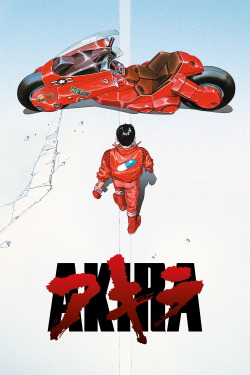
Review of Akira (1988) by Mark M — 09 Aug 2015
One of the indisputable gold standards of Japanese animation, Katsuhiro Otomo's Akira - adapted from his own manga - is a story like many others from post-World War II Japan; it tackles the socioeconomic effects of war, and the dangers of atomic power. Akira's subtexts, ultimately, is yet another manifestation of Japan's nuclear fear, but Otomo's film isn't a war film like Studio Ghibli and Isao Takahata's Grave of the Fireflies - released the same year - was. Instead, Akira jumps into the future and imagines a different Tokyo after another fictional World War.
Beginning immediately with an explosion that engulfs the entirety of Tokyo in a white light, Akira wastes no time in setting up the characters and premise set 31 years following the film's fictional World War III; it cuts right to the escalating and subsequent action sequence involving the Pills gang - a group of delinquents lead by Kaneda - engaging in a turf war with another gang, the Clowns, on high-speed bikes. A turf war which results in the capture of Tetsuo after the gang crosses paths with a mysterious person with psychic powers that the army is hunting, all whilst a separate political protest is on-going. And in just 15 minutes, Akira effectively lays the intriguing foundation of its story and characters.
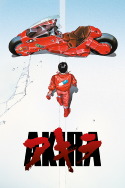
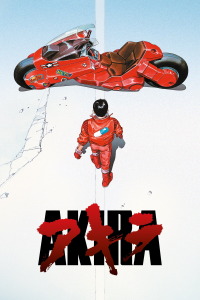
Like many other Japanese animations, Akira feels alive each frame and shot, as Otomo's direction brings life to Neo-Tokyo, brimming with lights and violence, a city being slowly torn apart as a fascist government struggles to hold it together, as a separatist group incites the public into around the city, one that has begun to erode as unemployment and school dropouts pile on. Racing beside folk music hybrid songs from the stellar soundtrack composition by Tsutomu ?hashi, there is a cyberpunk beauty to the film, from sequences of Kaneda racing on his blood red bike to the destruction that Tetsuo leaves in his wake as the story progresses.
With a visual design and animation that holds up 27 years later, Otomo additionally utilizes 'pre-scoring' - voices are recorded before there is any animation, as the latter is then done to match the recorded voices - to create a much more accurate, realistic portrayal of characters speaking. Though this only applies to the Japanese voices; the usual grating English voice acting remains dubbed.
Like the impending DreamWorks-Paramount Pictures produced, Scarlett Johansson-led Ghost in the Shell (1995) live-adaptation, Akira is an important chess piece in the onslaught of Hollywood remakes, reboots, sequels, prequels and unnecessary adaptations. As such, with the anime being a coveted piece of dystopian landmark in Japanese storytelling and animation that is sought after by Warner Bros. and Leonardo DiCaprio to be adapted into a live-action film, it's best to watch Akira now before the live-action, whitewashed potential catastrophe is eventually made.
This review of Akira (1988) was written by Mark M on 09 Aug 2015.
Akira has generally received very positive reviews.
Was this review helpful?