Review of After Hours (1985) by Spangle — 27 Jan 2017
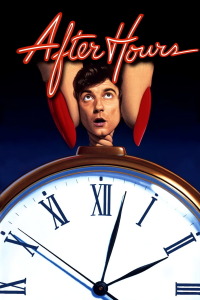
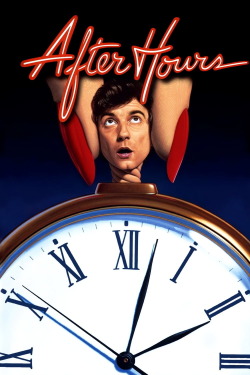
After Hours is either a ringing endorsement for cocaine or a cautious tale about what cocaine can do to the brain. With director Martin Scorsese channeling David Lynch's surreal approach to storytelling, After Hours tells the story of one man's really weird night as he tries to get home from the SoHo district in New York. Confronting dead girls, burned girls, weird girls, and an angry mob, Paul Hackett (Griffin Dunne) is simply a man who wanted to have sex and got more than he ever bargained for. Truly an odd experience, After Hours is a film that feels so unlike anything else in Scorsese's filmography. While you can still feel his presence (and he has a cameo), it feels so odd to watch unfold. By comparison, The King of Comedy feels like a perfect fit in his filmography, that is how odd this film is to experience.
After Hours is one of those films where once it is watched, you spend the time after the runtime trying to figure out what the hell it was about and whether or not you liked it. One possible reading of this is in regards to castration and the danger women could pose to men. From the psychos he hangs out with to the image of the shark biting off a man's member, After Hours seems to be arguing that men need to be wary of weirdos. But, above all, Paul is the weirdo. Thus, while that seems to be what Wikipedia believes, it is not necessarily one that I believe fits the film. Rather, the shark biting of the man's member in the bathroom is more in line with business and working life. As shrewd business people are often called sharks (Shark Tank), After Hours could be seen as a warning to men and women alike about the threats of being a slave to work. From the encounter in his office where a co-worker expresses his desire to not work there forever, the waitress who hates her two jobs, the mob leader who drives an ice cream truck, and Paul looking up to the heavens and begging for mercy, for he is but a simple word processor, the film is all about work. Everybody hates their dead end jobs and want to quit. Yet, they show up and do the job anyways and float through the day as if they were ghosts. In many ways, After Hours is a surreal black comedy that shows the dangers of working life and how it leaves you susceptible to being attacked out in the world.
Yet, Scorsese's approach to the film feels so odd and so off-the-wall. With threats coming from every angle, Paul Hackett finds friendly faces around the corner, but they consistently turn against him and join the angry mob that accuses him of being a thief. The film just feels so abrasive and antagonistic against both its protagonist and the audience. We constantly feel claustrophobic and trapped in this hellish nightmare right alongside Paul and, as a result, this can be a tough watch at times. It is one where your expectations are consistently subverted with even more absurd happenings around every corner and whether or not they all work, they at least shock you.
Acting-wise, the film is solid. Lacking the true big names of many Scorsese films, Griffin Dunne still holds his own as a leading man in a Scorsese film. He plays the typically straight-laced and entirely frazzled Paul Hackett terrifically and really captures the necessary everyman notes. He is a guy who could be working in any office in America and be nothing but a normal guy. Thus, his response to this weird cast of characters feel entirely genuine and within range for a relatively normal guy who has a very, very bad night.
While After Hours is certainly a screwball black comedy, its comedy comes from the absurdity of what transpires. What transpires is the artists revolting on a man working for the sharks of the world that steal and trample on the little guy. An odd film from Scorsese, After Hours proves that cocaine is one hell of a drug and if you wish to experience this in your life, cocaine can certainly help you replicate Paul Hackett's wild and crazy night. But, if you do not wish to have an angry mob running through New York after you and be trapped in a paper mache statue, maybe lay off the cocaine.
This review of After Hours (1985) was written by Spangle on 27 Jan 2017.
After Hours has generally received very positive reviews.
Was this review helpful?