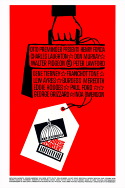
Review of Advise & Consent (1962) by James C — 01 Sep 2007
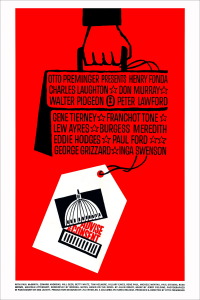
I was expecting this to be a good political thriller and represent one of the many mediocre efforts Hollywood took to atone for its assistance to the McCarthy hearings and the blacklist. I was expecting the film to star Henry Fonda as an idealist liberal (much as he was in real life) who was being mistreated by an overzealous conservative Senator. Instead the film was so much more, while its base is the very plot I expected, a principled liberal intellectual favored by the liberal media and the Academy is nominated by a liberal lame duck President and is opposed by a vindictive Southern conservative, the film transcends mere ideological arguments and forces the audience to discern the principles behind the politics and figure out the positive resolution. The film is incredibly complex and boasts one of the most impressive ensemble casts of all time, Henry Fonda, Burgess Meredith, Charles Laughton in his last and most memorable role (sporting a superb Southern accent no less!), Walter Pidgeon, and Peter Lawford (married to a Kennedy and playing a Kennedy like Senator no less). The film made a big buzz when it was released, not because it was particularly well received but more for the guessing game many audience members played when trying to figure out who the real life counterparts for the fictional senators. While that game is fun and a few Senators do come to mind, this film is so much more than that. The film begins when Majority Leader Munson (Pidgeon) a Michigan Democrat and close friend of the President is charged with pushing the Leffingwell nomination through the Senate as fast as possible. He is opposed in this endeavor by Senators Knox and Cooley, while Knox a Republican hawk modeled on Everett Dirksen and Barry Goldwater has a principled objection to Leffingwell Cooley is just out to settle an old vendetta.
Meanwhile Munson has appointed Senator Brig Anderson to head the Sub-Committee charged with rubber stamping the nomination. He is opposed every step of the way by Senator Ackerman who is a far leftist with few moral scruples that later tries to blackmail Anderson and force him to back down. At first it seems that the Southern Senator Cooley (Laughton) is pigheaded, bigoted, jingoistic, and wrong to oppose Leffingwell (Fonda) for the nomination, but more and more information is revealed. Burgess Meredith startling reveals that Leffingwell attended communist meetings when they were both students at U Chicago (yay!) and forcing Leffingwell to compromise some of his principles by lying under oath to save the reputation of his friend who did attend those communist meetings. Later Anderson learns of this lie and demands on principle that the President withdraw the nomination, it is at this point that the so far conventional film takes an unexpected and delightful twist. In a revolutionary scene for the early 1960?s a gay bar, a gay pimp, and a gay kiss are all shown as part of a series of revelations to challenge Senator Anderson and his past. The film than takes a brilliant twist as the audience generally siding in favor of the Mr. Smith like idealist liberal of Leffingwell begins to oppose the underhanded tactics required to confirm him and the Machiavellian intrigue of the President and it is here that sympathy begins to shift. The film presents several interesting ethical dilemmas, should good men be expected to commit some evil for the greater good? And if that evil turns out to be great should those same good men be punished for the evil their surrogates commit?
This was the first and to date the only film to have so much access to the Capital, the filmmaker Otto Perringer famous for his previous legal thriller Anatomy of a Murder creates a lot of tension throughout the film using shadows and darkness to convey the seemy side of Washington while using light tones to convey its glory. The film while over 40 years old is in fact quite modern and relevant even today, if anything more relevant with our scandal driven media. It is interesting to note the level that every Senator in the film despises Senator Ackerman for his underhanded tactics, rallying the mob, and using a PAC to funnel money and peddle influence, Senators of all ideological stripes in the film despise him as unbecoming of his post and it?s startling to note that the Ackermans of the world in fact now dominate the Senate and the great days of partisan but civil Senators have given way to the scandal mongers and political game players. The filmmakers were also ahead of their time by showing a Senate full of far more minorities and women than the actual Senate of the 1960s was. That said the bulk of the principle characters are still white men in suits engaging in a taut battle for supremacy at all costs. Perhaps the finest political drama ever made with great performances, great twists and turns, great cinematography and imagery, and a still all too relevant storyline.
This review of Advise & Consent (1962) was written by James C on 01 Sep 2007.
Advise & Consent has generally received very positive reviews.
Was this review helpful?