Review of A Woman Under the Influence (1974) by Mister C — 26 Feb 2006
What strikes me the most about both [b]The Fugitive Kind[/b] and [b]A Woman Under the Influence[/b] is that while the main characters have their problems, they are condemned for behavior deemed socially unacceptable. In the former, Valentine 'Snakeskin' Xavier (Marlon Brando) is a former New Orleans "entertainer" who has tired of where that way of life has led, and seeks a new start elsewhere. By fate, he comes upon a Mississippi town he's reminded of the past he's trying to escape, but both looked down upon for it and tempted to go back to it, through the townsfolk and Carol Cutrere. More an inconvenience than a derelict, she's more than happy to be bribed out of her family's company, but at the same time hates the drifting loneliness of being unsavory. She sees that self-condeming spirit in Snakeskin, and seeks a solace in being convenient outcasts. While he understands the grief and shame, he's determined to prove to himself that he's capable of the life change he desires.
At the same time, he's willing to exploit his aloofness when dealing with Lady (Anna Magnani), who is managing the store where Xavier has found work, in the stead of her bed-ridden husband. She is filled with hate, towards a domineering spouse, and towards a town that ruined her past, and now ogles she and Xavier in silent condemnation. Xavier is resistant towards any emotional involvement, both because of the possible repercussions, and out of a recoiling from Lady's arduous spite, although that's really just an excuse for his own fear and belief that he's undeserving of fulfillment in life. The anxiety builds until they realize that taking the risk is worth more than allowing circumstances to define who they are.
The script, adapting from Tennessee William's play Orpheus Descending and co-written by Williams himself, is verbose in describing the characters' predicaments, but Brando and Magnani's performances, as well as Sidney Lumet's assured direction, assure that it plumbs the masqueraded filth of the repressive Southern town, and the liberation of these characters. Unlike the adaptation [b]A Streetcar Named Desire[/b], it is uncompromising in illustrating their society's inability to allow happiness when it makes them reflect on their own malaise and hypocrisy.
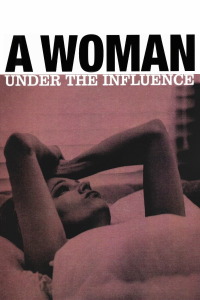
In [b]A Woman Under the Influence[/b], Mabel (Gena Rowlands) is the stay-at-home wife of Nick (Peter Falk), who works for the city, and is away at work for indefinite periods of time. She desperately treasures her children, to the point of seeming obsessiveness. She holds so tightly onto what she lives, she tries too hard. She's kind-natured, but is easily misconstrued. She focuses so much on what she desires, how she wants to please her husband and see her children thrive, that she's forgetful of other important details in the day-to-day. She grows easily despondent and detached when she is isolated from whom she cherishes.
Nick may understand her good intentions, and is appreciative of her spirit, but is unable to deal with the uncomfortability of her behavior which may seem different from the social norm. He is easily frustrated by his inability to elucidate on why she is the way she is, and either virulently lashes out at those he loves, or further alienates himself, becoming more undesirable and irresponsible than anything Mabel's been accused of being. Nick, their family, and friends all claim to be magnanimous in their desire for Mabel to seek help for her "problems", but they are insidiously and selfishly forcing her into a mold of behavior which is more comfortable for them to be around, ever more possessive and stifling of her than she of the children. Even after she has been "fixed", their desire for her to act natural, whatever that means, is more for their own comfort. Nick comes to realize that her fixations and idiosyncracies are an undeniable aspect of her character, and struggle as they may, they are able to persist.
It is possible to claim the film's aesthetic as being uncinematic or unpolished, but the fly-on-the-wall experience is exactly what John Cassavetes is trying to accomplish. It is an undeniable talent to have created histrionic, yet naturalistic performances that feel improvised, when they are in fact meticulously scripted. Falk and Rowlands are entirely transparent in inhabiting their characters. Due praise should be given to them and the ensemble for making these characters work, and to Cassavetes for crafting a work that examines personal identity and the influence of one's environment in an indelible manner.
This review of A Woman Under the Influence (1974) was written by Mister C on 26 Feb 2006.
A Woman Under the Influence has generally received very positive reviews.
Was this review helpful?