Review of A Thousand Words (2012) by Shiira — 09 Apr 2012
When Mookie asks Pino who his favorite movie star is(in Do the Right Thing), the epithet-spouting Italian-American answers, "Eddie Murphy." It's a testament to Murphy's talent that even the racist son of a pizzeria owner worshipped the then-former SNL star.
Given the time frame, the last film starring his screen idol which Pino probably saw in a Bedford-Stuy theater would probably have been Coming to America. For a man who resents how his Brooklyn neighborhood seems to be growing blacker by the day, the story about an African prince's mission to find a wife in Queens, should fill Pino with outrage, since Akeem, who finds work at a fast-food joint, is taking some McJob away from a white man.
If the prince had "jungle fever", however, then maybe Pino would turn on Murphy, and see for the first time, his confused assignation of a racial double standard that exempts entertainers(he likes Magic Johnson and Prince, too) from being "n*****".
In that scene with Lee, John Turturro mocks Al Sharpton, Jessie Jackson, and the Minister Louis Farrakhan, black men who are willing to fight back against the white establishment. And yet, in 48 Hrs., although Reggie Hammond gets called every name in the book by the cop who temporarily paroles him, the 1982 film allows the black man to retaliate, not only through off-color language, but with fisticuffs too, most memorably, in a knock-down, drag-out fight where Jack Cates takes his fair share of licks against the African-American convict.
This constituted as progress, because back in the early-seventies(Sweet Sweetback's Baadasssss Song, notwithstanding), blacks weren't allowed to challenge white authority. To hit a cop, especially a racist one such as "Popeye" Doyle in The French Connection, where Brooklyn's finest, posing as Santa Claus, surreptitiously calls some black youths "boy", as in "Have you been a good boy?" was unthinkable.
Inside the social club(whose dark-skinned patrons are the source of the lexical transference that Doyle lays on the two kids), there's movement, the surveillance pays off, when Det. Russo coaxes their target to flee, a chase that ends with police brutality, and intimidation in a back alley.
It's a show of excessive force made justifiable by the bodily incision Doyle's partner suffers from the black man's knife-wielding hand. But, of course, the times as they were, the whole filmic contraption was fixed ,with The French Connection being a prime example of how black actors were either cast as criminals or entertainers.
In the aforestated scene, the two stereotypes align themselves in perfect symmetry, on both sides of that bar window, in which Doyle keeps his eyes peeled for the con, while he urges the black kids into minstrelization by singing "Jingle Bells" to a jolly bigot, who later states, "Never trust a n*****.
" In another bar, another drug raid, Popeye corrects a patron after he calls him Doyle without prefacing his surname with a "Mister". Spike Lee was just 14 at the time when the William Freidkin film won Best Picture at the Academy Awards.
It would take another decade, but Sam Cooke finally made good on his word when he promised that "A Change is Gonna Come", during a blink and miss it moment in 48 Hrs., when a hegemonic shift in the racial hierarchy occurs after Jack's request that back him up is met with askance.
"Now why the f*** would I do that?" implores Reggie. In a scene that mirrors The French Connection(referring to Popeye Doyle, he says, "When white cops came in to f*** with me and my friends, the only thing that stopped us from kicking their a*ses, they had guns and badges.
"), Murphy walks into a monochromatic-skinned bar and intimidates the clientele just like Gene Hackman did back in '71. "There's a new sheriff in town," promised Murphy. Now, after countless bad movies, including A Thousand Words, you could say that Murphy put himself "Back on the Chain Gang".
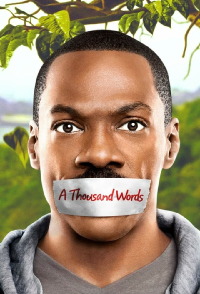
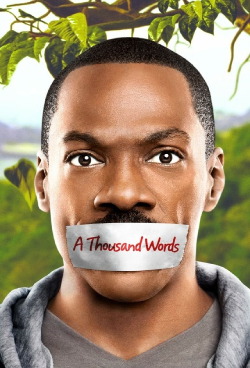
The Bodhi tree, often associated with the place that Prince Siddhartha finds enlightenment, is transmogrified in A Thousand Words, an unaware Buddhist horror movie, because Bo doesn't want Jack McCall, a literary agent, to meditate.
Uh-uh. This Sacred Fig wants him dead. Pitched as a comedy, Dr. Sinja, a New Age guru whose book Jack aspires to publish, goes largely unexamined as a psychopath, since, contrary to his avowed obliviousness to the evil leaf-letting Bodhi's origin, is probably the man who directs the ficus to sprout in Jack's garden.
After countless depictions of evil Christians, Dr. Sinja is that rare character in film: an evil Buddhist. The tree dictates Jack to do the right thing and choose his words wisely, which he does, but still, the Bodhi kills him.
"The fake me died," he says. Only then does the guru agree to work with Jack(or is it "Jack"). A Thousand Words is like some bizarre eastern retelling of Invasion of the Body Snatchers.
Jack isn't a pod person, but rather, a Bo one.
This review of A Thousand Words (2012) was written by Shiira on 09 Apr 2012.
A Thousand Words has generally received mixed reviews.
Was this review helpful?