Review of A Star Is Born (1954) by David U — 26 Dec 2005
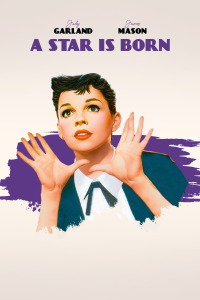
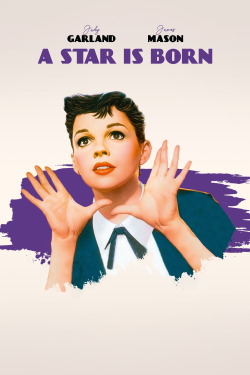
[font=Tahoma]Judy Garland is one of cinema's most fascinating stars, and, as is usual, this is because her life was a tragic one. After her breakout success with the legendary [i]The Wizard of Oz[/i], Garland's career underwent a tumultuous state, with her fluxuating weight problems, lack of self-confidence and drink and drug problems affecting her career to the extent that she ultimately died of them. After her weight problems were more evident than ever in 1950's [i]Summer Stock[/i], Garland went into rehab, and emerged four years later in triumphant form to give a career-best performance in this, [i]A Star Is Born[/i].
A remake of the 1937 film which starred Janet Gaynor, the story is not an original one: an aspiring actress is discovered by a famous actor who's on his way down, and, while her star rises, he falls from grace. Garland is the actress, in the form of Esther Blodgett, who, a singer with a small orchestra, is booked into the same show as star Norman Maine (James Mason), whom she has to deal with when he, drunk, stumbles onto the stage during her act. Apparently infatuated, Maine recommends Esther to the studio, where his manager Matt Libby (Jack Carson) hires her and informs her that her name needs changing. Thus, Esther becomes Vicki Lester, and, after some lucky chances, she gets herself a starring role.
[/font][font=Tahoma].
All the while, though, Norman comes to rely upon Esther as his problems get worse and Libby tires of him, but Esther, thankful for the help he has given her, accepts his offer of marriage. But, even though they manage to escape the studio's plans for a big wedding, Norman's problems continue to escalate, and he is fired. Esther is torn between her career and her marriage, but, even though Norman has descending into a state where he seems to have no true concern for her, it's an easy choice.
[i]A Star Is Born[/i] presents an outstanding portrayal of two constantly intertwined things: Hollywood, and alcholism. It is also fascinating to compare the storyline of the film to the situation in real life: in actuality, it was Mason who was the rising star, having emigrated from his native England to begin success in Hollywood, while Garland was the one with the problems and had been on a slide. Indeed, the casting of Norman went through many possibilities before Mason was chosen: also reportedly sought were Humphrey Bogart, Cary Grant, Montgomery Clift, Marlon Brando and Gary Cooper, all of whom, it would seem, wanted to avoid playing a has-been actor. It's now hard to imagine anyone but Mason in the role: his excellent combination of charm and a foolish inability to stop himself falling is perfectly done, remaining sympathetic until the end, even when it seems like we could turn on him. However, he's bested by a sublime Garland, at her very best here (indeed, she was always a fine actress, but this has unfortunately been overshadowed by her problems), in a tender performance which charts a star's rise; Garland always makes Esther seem uncomfortable except when around Norman, which perfectly accents the idea that he is the first thing in her mind.
This is a long film indeed, even when watching the 154 minute cut it was originally reduced to (a 176 restored version has since become available), but under the steady and surprisingly inventive hand of George Cukor, it remains compulsively watchable. Particularly at the end, Cukor seems to be dabbling in an un-Hollywood idea of symbolism, using the crashing waves of the sea outside the couple's house to portray Norman's mental state. His use of angles is also varied, creating the different emotions we can look at the characters with, coupled with a tender style which involves the audience in Garland's conflict. He uses grand, distant camera angles during the studio scenes to portray the distance the star's felt, and more intimate angles during the scenes between Garland and Mason.
[/font][font=Tahoma].
Given it's length, it's hard to allow [i]A Star Is Born[/i] to make an impact as the musical piece it actually is; but it not only contains the classic number "The Man That Got Away", sung by a resonantly chilling Judy Garland, but also the fifteen minute dance number "Born In a Trunk", which, while overlong, is quite fun. There's also an elaborate dance number which Esther performs for Norman in their home, which utilises many different props and is highly entertaining.
[i]A Star Is Born[/i] is one of the most honest portrayals of Hollywood ever to come out of itself, effortlessly showing the effect of a stifling studio upon their actors, whom they can't seem to grasp as real people. The creation of alter-egos- Norman, we learn during the wedding, also had his name changed- seems to be a way for Hollywood to treat them as workers, and ignore their personal lives and problems. It is also a great film about the problem of alcholism because it shows the crumbling effect of drink on a person and his entire life. Accented by two of the best performances Hollywood has ever seen, [i]A Star is Born[/i] is not a film that sets the expectation of being so brilliant; and perhaps that's why it is. The film was marked by the unfortunate loss of the Best Actress Oscar, which should have been Garland's, to Grace Kelly, which sent Garland into yet another downward spiral from which she never truly recovered. [i]A Star Is Born[/i], in light of this, is a testament to the truly beautiful ability of Judy Garland, who, like the character of Norman Maine, ultimately let her demons overcome her.
[/font].
This review of A Star Is Born (1954) was written by David U on 26 Dec 2005.
A Star Is Born has generally received very positive reviews.
Was this review helpful?