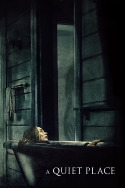
Review of A Quiet Place (2018) by Zainab A — 16 Apr 2018
"The only way to see a film remains the way the filmmaker intended: inside a large movie theater with great sound and a pristine picture." - Ridley Scott.
The viewing experience begins as it does for most films; the audience pours in and settles into their seats, the lights dim, the advertisements begin. People chat about films they would like to see, those they wouldn't, and the ones that simply did not need a sequel.
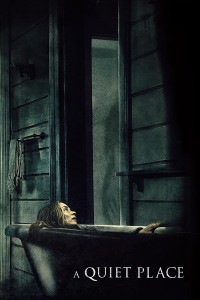
Then, A Quiet Place (Krasinski) begins. As it progresses through its largely silent storyline, one can't help but notice what the film achieves - the crowd is silent. The popcorn is forgotten for fear of chewing too loudly. Even in the most frightening scenes, any screams or gasps in the audience are quickly followed by a period of shocked hush.
The film revolves around the struggles of the Abbotts, a family who live in a world where creatures that hunt by sound roam, forcing them to exist in silence. The characters must communicate, move, and gather supplies in as quiet a manner as possible. In this way, the film makes sound (or rather, the lack of it) "a main character", as described by director John Krasinski (The New York Times, 00:00:54). This constant presence results in enforced silence being the film's primary form of architecture of confinement. In shining a light on sound, the film produces a combination of effects that initially seem almost paradoxical - the audience simultaneously engages in the suspension of their disbelief, and in a heightened awareness of the fact that this is only a film, as their attention is drawn to the means of cinematic production.
The film uses silence to create undertones of imprisonment; of boundaries; of oppression by one's own voice. This is largely accomplished through its content, given that the storyline revolves around associating sound with danger and fear. However, the form also serves to accentuate this force - one notable pattern is the use of exaggerated sound effects when close up shots are used, as seen when the Abbotts walk along sand in the forest. This serves to focus the audience's attention on even the smallest movements and noises, building a tense atmosphere of paranoia. In large, open spaces such as forests and fields - areas that would typically be associated with freedom and a sense of peace - the audience feels unbearably constricted by sheer silence.
Where the first half of the film seeks to set up this confinement, the second depicts these boundaries being breached. The characters are forced to take control of sound through the use of guns and fireworks. This is exemplified in the climax of the film - Lee, the father, watches desperately as his children are trapped in a car by one of the creatures. A look of resolve settles on his face before he lets out one devastating, and yet undeniably liberating, shout, sacrificing himself in order to protect them. In watching the characters limitations fade away, the audience too is empowered to once again hold control of their own voice.
Perhaps the reason A Quiet Place is so effective in the way it encourages viewers to delve into their world is the meticulous attention to detail, especially apparent in the set design. Those who are closely attentive while watching are rewarded with a sense of satisfaction upon seeing that even the most minute possibilities are considered. For example, in the opening scene, where the Abbotts gather supplies in an abandoned supermarket, shelves are lined with untouched packets of crisps which would be too loud to open. Similarly, in the scene in which two children play monopoly, one might notice any plastic pieces have been replaced with cloth and other items that would not make a sound when being moved against the playing board. Such thorough considerations help to produce a world that is somehow both new and foreign enough to be exciting, yet familiar and logical enough for the audience to feel as though they fit in. Simply, the film may be set in a post-apocalyptic atmosphere, but the characters are trying to live normal lives, and onlookers can understand this.
On the other hand, A Quiet Place also manages to alienate the audience by constantly reminding those watching that this is only a film, as it draws attention directly to the cinematic means of production, demystifying them in the process. This is the result of the conspicuous lack of extradiegetic music, which serves to remind viewers of the backing soundtrack that they are so accustomed to hearing in cinema. In developing a consciousness of their own position as the 'big other', mere passive onlookers, in relation to the characters, the audience becomes especially aware of the fact they are sat in a room watching a film. These two antagonistic effects in combination generate the thrill of A Quiet Place. It sets those watching in the middle of the action so as to emotionally involve them, and yet reminds them of how incapable they are of changing the plot.
As the credits roll, the theatre room slowly comes back to life. Sound once again fills the surroundings as people pack up their belongings, and the volume builds as the discussion does. A Quiet Place is truly a film that deserves (or even, necessitates) a viewing in cinema. Only in this way can viewers appreciate the building, and subsequent liberating transgression of, an architecture of confinement that many would likely have never contemplated in such depth before - sound.
This review of A Quiet Place (2018) was written by Zainab A on 16 Apr 2018.
A Quiet Place has generally received very positive reviews.
Was this review helpful?