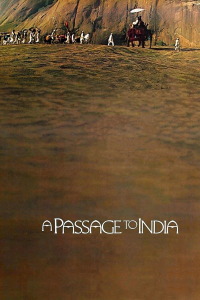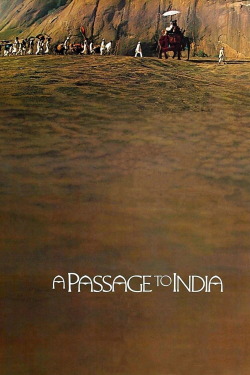
Review of A Passage to India (1984) by Alex M — 10 Sep 2004
(SHORT REVIEW):
My father has a deep and abiding hatred for films in which, as he puts it "A bunch of stiff-lipped Brits sit around in the middle of a jungle wearing fancy hats and sipping tea while dark people serve them". As the prime example of this sub-genre of film, my father points to David Lean's [i]A Passage to India[/i], and that is why I approached the film with a certain degree of apprehension. The film certainly does contain a lot of British people sitting in the hot weather sipping tea (and yes, they are being served by Indians), but [i]A Passage to India [/i]at least has the sense to question the sense of racism and superiority that many Brits felt while living in India. The film is based on a novel by E.M. Forster, and like many films adapted into novels, it sometimes conveys the sense that some of the smaller details of the book have been left out, or at least not conveyed very effectively. Nevertheless, [i]A Passage to India [/i]does an uncommonly good job of keeping us interested throughout most of its (long) running length. The film might have benefited from being shorter (unlike some other lengthy films, there was ample opportunity for tightening this story), yet David Lean has often been prone to ballooning intimate stories into epics. For about the first hour of the movie, it is not exactly clear what the story is about, yet this may be the best hour of the film, because it subtly explores the culture differences between the British and the Indians. Later on in the film, [i]A Passage to India [/i]begins to shift to a much darker and more unsettling tone: it subtly manages to suggest that the heat and wildness of the Indian geography (and the expressiveness of the people) conflict with the sexual repression of the British. Lean doesn't fully explore these themes, but they are bubbling beneath the surface story of the movie. Although the film was based on an acclaimed book, any aura of prestige quickly dissipates during the third act, with courtroom scenes that would be at home in any schlocky melodrama. This conventional ending, and the bizarre final scenes involving a character we haven't even met (perhaps she was more developed in the novel), lessen the impact of the earlier sequences. Yet even the movie's flaws raise interesting questions about race. Like Lean's [i]Lawrence of Arabia[/i], this is a deeply flawed and problematical film that seems to have a hazy view of whether or not the British are justified in their feeling of superiority toward "lesser" races. On the one hand, the movie treats many of the Indian characters with respect (particularly Dr. Aziz, played somewhat clumsily by Victor Banerjee). But the presence of the Fielding character as a surrogate for the audience implicity suggests that Western audiences would not accept Dr. Aziz as their hero...even though he is the natural focal point of the story. There is also the presence of Alec Guinness, a Brit, playing a Hindu professor (to be fair, though, Guinness is a superb actor, and there is never a whiff of condescension in his performance). [i]A Passage to India [/i]is a deeply flawed film, but it is worth seeing...perhaps more for the issues it raises about culture clash than for its surface content.
This review of A Passage to India (1984) was written by Alex M on 10 Sep 2004.
A Passage to India has generally received positive reviews.
Was this review helpful?