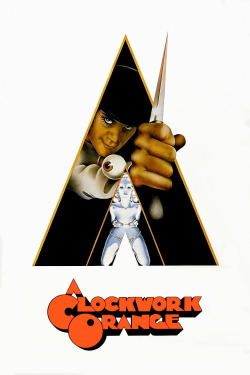
Review of A Clockwork Orange (1971) by Cameron J — 08 Jun 2013
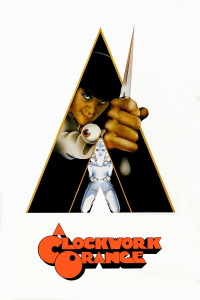
Disturbing imagery, violence, sexual depravity, an overlong runtime and Malcolm McDowell! Now that sounds like either one wild party or, well, kind of slow, because this film was Stan Kubrick's follow-up to "2001", a film so slow that it pretty much redefined the term "liveliness" for Kubrick. Shoot, this film sounds more like a summarizing of the highlights in McDowell's career, because "Caligula" was pretty much everything in this film, only amped up and, well, not as good, and it, like "O Luck Man!", outstayed its welcome, so this film really does define a career that no one really keeps up with. Hey, at least McDowell is doing better than David Prowse, because the only thing that people recognize him for that doesn't involve a Darth Vader suit is a minor appearance in this film, in which he looks too gay to be someone as cool as Anakin Skywalker... as opposed to Hayden Christensen. Actually, forget McDowell and Prowse, because this film is really a definitive note for Stanley Kubrick, because if you're looking for a Kubrick film that features all of the violence, disturbances and profound analyses into the depraved depths of the human mind, often accompanied by cool, bouncy cinematography and too much narrating, that he's into, then first off, you're a little bit sick-minded, and secondly, you should check this film out, mostly because "Eyes Wide Shut" is too much of a challenge to sit through. Speaking of which, I must say that this film is surprisingly pretty relatable, because when I was looking at all of the disturbances and sexual depravity in "Eyes Wide Shut", I, like McDowell's Alex character, found myself exclaiming, "Stop it, I beg you, this is sick!", though that's only because I had to watch "Eyes Wide Shut" in order to see all of that stuff. Needless to say, you probably won't be doing as much complaining about this film if it was the one that you had to watch while being strapped down with your eyes pried open, and yet, with that said, as good as this film is, you're full investment finds itself challenged enough without reformatory torture.
There is a fair bit of freneticism in the film, but it's primarily found within dialogue that gets to be a bit too snappily witty to be all that easily comprehensible, at least to Americans (Ladies and gentlemen, Stanley Kubrick, the most British filmmaker from America), so you shouldn't expect there to be too many offputtingly frantic moments that aren't of a pet peeve nature, though that's not to say that there aren't still those occasions that feel kind of undercooked, if not just plain abrupt, and are, of course, still outweighed by the slow spots, though surprisingly not by much. I joked about how "2001" gave Stan Kubrick a taste for dry atmospheres and that this, the film in question's successor, was at particularly high risk for limp spells, but there really aren't as many slow spots as I feared, which isn't to say that there aren't still those moments in which all of the intensity and color within this film's distinct atmosphere quickly descend into a distancing coldness that allow you to step back and meditate upon the limp areas that rest, not in the atmosphere, but on paper. At about two hours and a quarter of generally extensive character studying, this film isn't as overlong as other efforts by Kubrick during his golden years... and whatever you want to call that one year he made that disaster of an overblown career capper called "Eyes Wide Shut", but it does indeed outstay its welcome at times, with expendable sequences, if not sequences that truly meander along and begin to lose you after a while. There are repetitious moments that may be quite limited, but are nonetheless present, dragging along a film that was never really to pick up all that much, or at least doesn't appear to when you try to see the full potential of this film's story concept through the flawed execution itself. Anthony Burgess' novel's story concept is very strong, and there are apparently plenty of worthy liberties taken in this interpretation by Kubrick, as screenwriter, so the film stands a really good chance of being quite strong, yet such potential is not only squandered, but with natural shortcomings that are so emphasized by shortcomings in storytelling that, after a while, you can't help but detect them within the story concept that, when taken broadly on paper, hits, thanks in part to the aforementioned pacing issues, and largely thanks to the film's failure to actively pick up all that much atmospheric momentum as things progress down the same path that starts out so rich, but settles too much over time. If there are truly excellent moments in the final product, they're limited in quantity, but the film starts out very strong, with early acts that deliver on a refreshing intensity and enthralling audacity that hook like a goring bull, but begin to settle after a while, never to where you're less than thoroughly compelled, but decidedly to where momentum dies down a bit after a while of uneven pacing and natural shortcomings that combine to hold the final product back from its limited, but nevertheless reasonably hefty potential. Still, what the film does well, it does probably more well than it should, as plenty of the final product's high points leave you to think about what could have been, though not so much so that disappointment outweighs compellingness, reinforced by anything from inspired onscreen and offscreen performances, to, of course, sharp style, even within the musical aspects.
Somewhere about halfway through his career, Stan Kubrick really got into playing with musicality as a stylish supplement to his storytelling, and more often than not, such experimentation really worked, with this being anything but an exception, boasting a fine, primarily classical soundtrack that boasts an entertaining loveliness whose ironic placement over disturbing imagery proves to be about as effective as the outstanding original pieces by Walter Carlos, whose efforts are not only unique, dynamic and delightfully style, but chilling in a playfully unnerving fashion that fits the tone of this film like a glove, much like fine visual style. This film was nothing short of a one of the most crucial in Kubrick's career as a style innovator, because after years, upon years, upon years, Kubrick, through this film, unlocked the type of filming style that would define some of his most recognized years, and couldn't have done it without the arrival of the man who would go on to shoot some of Kubrick's most photographically memorable efforts, John Alcott, whose fine coloring and gritty lighting bond to form a visual style that defines the distinct tones of the colorfully dark film, especially when backed by Kubricktastically clever framing that stylishly bounces as immersively pronounced, yet is tight enough to give you an intimate feel for what the film most intensely focuses on. By their own right, the stylish musical and photographic touches stand out as unique and impressive by their own right, and when such style bonds with substance as storytelling components, they do a fine job of coloring up the depths of this very stylish film, but at the end of the day, style alone cannot drive the engagement value of this film, thus substance must stand firm on its own, without stylistic compliments, in order to keep you going. As I said, pacing issues, natural shortcomings and an overall neglection to play with momentum in storytelling all that much hold the final product back from the all-out strength that it perhaps easily would have achieved if it was more focused and realized, but this is still an intriguing tale, with a refreshing and juicy story concept that is partially brought to life by a script by Stan Kubrick that not only delivers on generally clever dialogue, but on an exploration of important themes dealing with dark depths in humanity and the willingness to take dark actions to combat dark actions that is subtly piercing, provocative and further charged by Kubrick's efforts as director. Were Kubrick even more realized and less flawed as directorial storyteller, he could have powered the film as generally strong, but if there are strong spells in the film, they're typically powered by what Kubrick does so very right, delivering on audacious imagery that effectively plays with anything from John Barry's colorfully intricate and distinguished production designs to disturbing visuals that give you a sense of tension that ranges from subtly striking to nerve-piercing. Kubrick could have done more, and perhaps should have done more, but what he does right really engrosses as effective sellers of this film's layered human depths, which are, of course, further sold by a slew of charismatic and strong performances, the strongest of which being by excellent leading man Malcolm McDowell, who does more than just deliver decently engaging narration, delivering on electric charisma and piercing dramatic range that sell the agonizing changes within the leading Alex character who grows from a disturbed young madman into a forcibly "rehabilitated" reject, and who McDowell truly becomes. I haven't kept up with McDowell's career too much, but I haven't really heard the most flattering of things, so you can say what you will about McDowell's other efforts, but quite frankly, it's difficult to deny that he really does carry this film in a lot of places with a revelatory lead performance that is just one of many considerable strengths in the final product, which, much like "The Shining", is too undercut by storytelling and story concept shortcomings to stand as excellent, even with its being so well-made in so many places, yet still goes powered by its accomplishments enough to reward the patient as an entertaining classic of an intensely audacious drama.
When the experiments are over, hurried spots and slow spots give pacing a kind of unevenness that, when combined with limited attention to plays with momentum in resonance, emphasize natural shortcomings to the point of driving the final product short of what it could have been, but not so short that it doesn't still compel more often than not, delivering a unique, colorful, dynamic and effectively stylish soundtrack, excellent cinematography, and an intriguing story whose going carried by clever and thematically sharp writing, generally audaciously effective direction, and strong acting - especially by an excellent Malcolm McDowell - leaves "A Clockwork Orange" to stand as an unfortunately flawed, but ultimately rewarding study on the morally questionable suffering of those who go punished for their own immoral actions.
3/5 - Good.
This review of A Clockwork Orange (1971) was written by Cameron J on 08 Jun 2013.
A Clockwork Orange has generally received very positive reviews.
Was this review helpful?