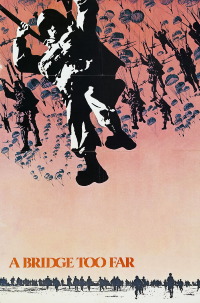
Review of A Bridge Too Far (1977) by Adam F — 17 Oct 2013
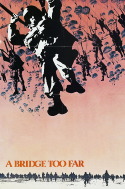
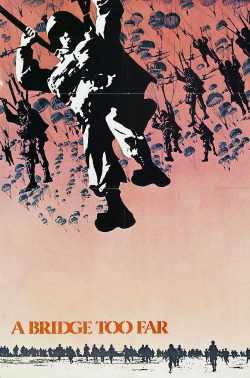
Although "A Bridge Too Far" doesn't quite reach that level of a masterpiece that should be on the top of everyone's viewing list, it truly is an epic war film with more than a few truly impressive moments. The film tells the story of Operation Market Garden, a plan by British Field Marshal Bernard Montgomery that will allow the Allied forces to penetrate the German defenses and quickly end the Second World War. The operation consists of dropping 35,000 men behind enemy lines in the Netherlands. Once in position, the troops will quickly take down the few defenses in place and secure three key bridges. Once secured, these will allow ground troops to move quickly and enter Germany. The Allied forces are being pressured into the plan because the war is overextending their resources and quickly, problems arise. Soldiers are told that they will face Hitler Youth or old men, when in fact a major division of the German army is being sent in the direction of Arnhem, where the final, crucial bridge is located. The area selected for the air drops is only vaguely established and the radios likely won't work. Despite a long list of potential hickups, no one speaks up. The mission is built up as so crucial that no one wants to rock the boat and the mission that should have lasted at most 2-3 days quickly spins completely out of control.
The production of this film is unbelievable. There are literally thousands of people parachuting during the beginning of the film. No fancy computer effects, no stock footage. They literally got a hand of dozens of planes and gliders, filled them with actors, flew them up and then got the men to jump out with their parachutes. The scene where you see this army being deployed is spectacular. Every detail has been meticulously re-created and the excellent camera work puts you right into the action. You even get a point of view shot of a soldier parachuting down; that's something you haven't seen before. They must have found one insane cameraman that agreed to haul that big camera (the filming was made in 1976, so this was not a small recording device), jump out of the plane and land on his feet. It's one unbroken shot and it's a real sight to see. Similarly, there is a battle scene towards the end of the movie where they literally tear down an entire town. Tanks are driving through buildings, bombs are being dropped on roofs and all the while you see dozens of actors scurrying through, shooting at each other. These battle scenes are the crowning achievement of the film.
Don't think that this story glorifies war though. Particularly at the beginning, it's a cringe-inducing experience that shows the folly of war. The strict military setting creates the perfect storm for a mission that on paper appears simple but ends with the blood of thousands on its hands. This clash of strict, almost mathematical planning clashing with human error and pompous denial is at once hilarious and heartbreaking. There is a moment where you see true desperation: the soldiers are running low on supplies, the air drops containing food, clothing and ammunition are only about a hundred meters away but the Germans have seized the drop zone. The men look helplessly as the canisters painted with their flags are taken away by the enemy and used against them. Then, a glimpse of hope (or is it the straw that broke the camel's back?); a canister falls close by and a lone soldier runs towards it. Everyone else is either cheering, or trying to call him back and the way that scene ends, is powerful stuff.
At times, it does being to slow down too much. At nearly three hours and with so many characters, locations and battles it actually becomes hard to follow. Because of the length and the complexity of the set up and operation, it kind of feels like some of it didn't quite pay off. It's a good thing that many of the actors were either big in their time or became big later because otherwise you would really need to take notes while watching the movie to be able to follow it and remember who's who. These are not faults that hurt the movie in a major way but they prevent "A Bridge Too Far" from being one of those war films that you feel foolish for not having seen yet. It might not be a movie you crave to revisit every year but wow, check out the spectacle here. It's so impressive to see all of the effort put into the film that in no way will you be disappointed that you invested your time into seeing Richard Attenborough's war epic. (Theatrical version on Dvd, September 25, 2013).
This review of A Bridge Too Far (1977) was written by Adam F on 17 Oct 2013.
A Bridge Too Far has generally received positive reviews.
Was this review helpful?