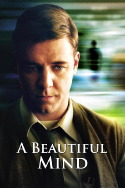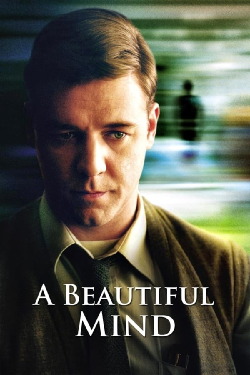
Review of A Beautiful Mind (2001) by Edwin P — 05 Apr 2013
Will the real John F. Nash, Jr. please stand up?
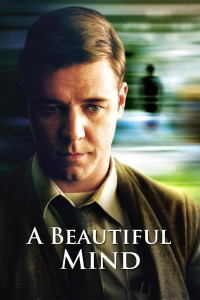
"A Beautiful Mind", which was inspired by the biography of the same name by Sylvia Nasar, has nothing to do with the real John Nash, Jr. who won the Nobel Prize in 1994. What we have here is an impostor, a fictional character with the same name as the real John Nash yet director Ron Howard, screenwriter Akiva Goldsman and company have taken it upon themselves to tell his story much like the actual events complete with title cards at the end of the film stating where Mr. Nash and his wife currently resides and what they are presently doing.
The real John Nash is a complex, difficult and at times, a selfish and insensitive individual. What the filmmakers have concocted here is a work of fantasy (forget fiction). It neither belongs to the real John Nash nor to the psychiatric profession as it inaccurately depicts the schizophrenic condition. Expunged, among other things, are his arrogant, rude and sarcastic behavior; his mistress Eleanor and his illegitimate son; his homosexual relationships; his arrest for indecent exposure; his divorce from his wife Alicia and his involuntary commitments to numerous psychiatric hospitals. His delusions about messages from alien creatures are replaced by espionage and spying only to give the film dramatic weight and tension. The film also takes dramatic license as to the timing of his mental illness.
With a subject matter that tackles the brilliance and genius of a real life mathematician and his bout with schizophrenia, it is ironic how Ron Howard would insult the intelligence of his audience by dumbing down certain events about the real John Nash. Is he afraid that audiences will be unable to handle the truth and honesty about John Nash's life and still be sympathetic to him and his condition? From the get-go, Howard gives us a character that is so likeable unlike the real Nash just so that the audience will automatically care for him despite his mental illness.
However, even with all these faults, Mr. Howard certainly knows how to push the right buttons as most people unfamiliar with schizophrenia and John Nash will ignore these inaccuracies and omissions of fact and still embrace the film. This is the type of film that mainstream audiences love with hardly a single curse word and a happy ending. Expect the Academy to do the same come Oscar time.
What the film has going for it is the fine performances of its two leads Russell Crowe and Jennifer Connelly. However, there were times where Mr. Crowe would speak at a very low unmannered voice that one could barely hear what he is saying.
It is very ironic that another film that I would also have problems with its historical inaccuracies and omissions of fact would also star Mr. Crowe himself - Michael Mann's "The Insider".
"A Beautiful Mind" avoids the complexity, turmoil and harsh realities of its subject matter. Contrary to what the filmmakers would like you to believe, the screenplay DOES NOT capture the essence of the story. "A Beautiful Mind" could have been a rich and powerful film of significant human interest. But it isn't. Strategically released on Christmas day, it does nothing more than lift one's spirits by using false notes. It neither inspires nor educates. It hardly even entertains.
This review of A Beautiful Mind (2001) was written by Edwin P on 05 Apr 2013.
A Beautiful Mind has generally received very positive reviews.
Was this review helpful?