Review of 71 Fragments of a Chronology of Chance (1995) by Derek B — 30 Jul 2010
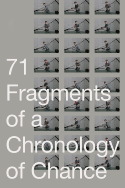
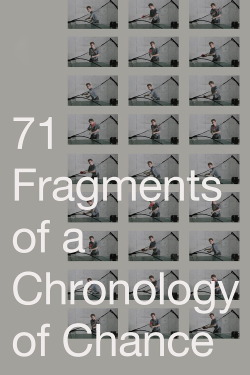
The third and final part of the bleak outlook on Austrian life in general from Michael Haneke. This film takes a much bolder approach and features a degeneration of character that is ever so familiar with his current work. Told through a series of vignettes, this film can truly be considered a really long montage of different scenes put together that are seemingly unrelated, but the mere fact that everyone has their own little universe to live in shows that every character's story is somewhat related. And they all eventually come together in the end.
This film is not just one story, however, from the opening news segment detailing a brutal shooting at a Viennese bank, the story begins to unfold. No names are mentioned and the characters are presented to us little by little over the next few scenes. Some of the main players in this drama are a couple who have recently become parents, and the stresses of work are getting to them, another couple who adopt an unloving/emotionless child, a frustrated young student, and a Romanian illegal immigrant who is just finding his way on the streets of Vienna. All of these characters have nothing to do with each other over the course of the film, but one thing actually binds them: life itself. They all deal with the frustrations and worries of general life, whether it is dealing with a crying child, failing to solve geometrical puzzles or digging for your meal in a garbage can, the characters can all say that they can relate to each other in some way, shape or form. However, it obviously plays out much differently for each story.
The film is highly emotional as many different behaviors are shown. Yet solitude and melancholy reigns supreme in Haneke's universe and this mood sets itself down upon the hapless city as a primary character. Haneke's methods of direction focus on the real, as all his story ideas from this trilogy (The Seventh Continent [1989] and Benny's Video [1992]) are stories that have the scary potential of really happening and had even been gathered from real events that shocked Haneke so much, he had to tell a fictionalized story with them. He breathes life into these characters and makes them more victims than villains. As no matter what, as cruel as a method might be, Haneke gives each character a superbly believable life. And the situations that arise, whether they be good or bad are done in such a way that can make an audience member say "Wow, I could actually DO those things!" I am not saying that we all can murder or rob, but more so the fact that each one of the parents, criminals, killers and thieves have no sort of possession or compulsion for evil. It is just something that happens when the pressure gets too tight. The act that inspires this shooting that is spoken of at the beginning of the film is more or less the final blow to the psyche of a person who just could not endure the bad hands life gives from time to time.
This film is where the photography of Christian Berger starts to shine. Although he had done previous work for Haneke on Benny's Video, he employs a more graceful and moving role for the camera. There are still the classic wide shots that are iconic in most Haneke films, but added in are tracking shots that seem to give motion to the environment surrounding the thousands of people living with each other in the city.
Mixed in with Berger's cinematography is Haneke's love for shots of televisions. The forceful way of shooting a TV screen for us to watch is almost a chore to endure as it is, but when the monitor is depicting bloodshed coming from Austria's neighboring countries, it is almost unbearable to watch as our story seems to be caught in the middle of conflict, with no end in sight. There are talks of war in the Bosnia-Herzegovina region (which was, at the time, really happening), the conflict in Somalia (also then a current-event) and the IRA bombings in Ireland among other examples of the "bad news" we all must watch every day. These news segments seem to bridge the gaps between us and the film's characters as we could try to disassociate ourselves with the fictional world of 71 Fragments, however, they are supposed to be real people in our real world who are living among our world's real problems and that is one of the more unsettling realities of this film.
It was a great experience and highly worthwhile for those who enjoy the slower moving yet amazingly realistic dramas that depict culture, and of course, the media's hold over all of us.
This review of 71 Fragments of a Chronology of Chance (1995) was written by Derek B on 30 Jul 2010.
71 Fragments of a Chronology of Chance has generally received positive reviews.
Was this review helpful?