Review of 42 (2013) by Christopher P — 19 Sep 2013
An adult look at racism and heroism...
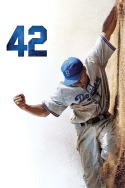
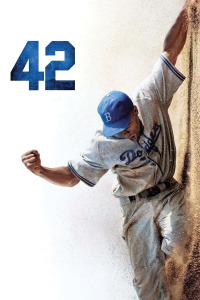
The story of Jackie Robinson is one of the greatest we have here in America. Not only is it a story about overcoming insurmountable odds, it is a story about why idealism should never die. It is also a story worthy of a film, a mass audience, and many awards. "42" should enter the lexicon of a required viewing.
Jackie Robinson will be remembered for many things: he is one of the most talented baseball players and athletes ever, he broke the color barrier in baseball, was an icon and superhero to millions, and a champion for civil rights. He's been the subject of countless documentaries, articles, and biographies, and now has his own live-action feature film.
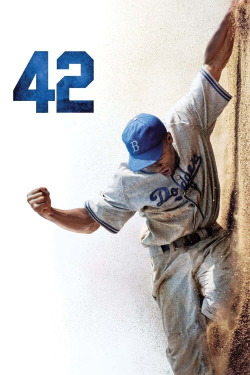
For the few of you who don't know, Jackie Robinson was the second baseman for the Brooklyn Dodgers and the first African American to play in the major leagues (the MLB). In "42" he is played by Chadwick Boseman who gives a solid, dignified performance to the role. In the early 40's, Jackie Robinson was a hot, young, Negro League phenom who caught the attention of the general manager of the Brooklyn Dodgers, Branch Dickey. Dickey, played by Harrison Ford in his best performance to date, is an idealist Christian who sees Robinson's potential for wins and dollar signs. He wants to sign him, but he has one condition, Robinson must never fight back against the tens of thousands of people who will say anything to get him to quit.
The film covers Jackie Robinson's first two seasons in a whites-only baseball league. His first season takes place in a AAA baseball club, a minor league affiliate called the Montreal Royals. Here, Robinson meets an African-American reporter who becomes a vital ally and spiritual adviser during his tenure. Like Dickey, the reporter sees Robinson's potential for unimaginable greatness. He is played wonderfully by Andre Holland who I would like to see more of in upcoming pictures. The second season takes place with the Dodgers during their amazing, yet tumultuous run to the 1947 World Series.
During this season, Robinson faces adversity like no athlete before or after him. He is belittled by many of his teammates, ridiculed by thousands of white Dodger fans, and is forced to swallow his pride, even after being called everything in the book from nigger-boy to porch-monkey. He is also physically abused on multiple occasions, and narrowly escapes a lynching. During one game, early in his rookie season, he is chastised, humiliated, and berated by a Philadelphia ball coach who hates just about anyone who doesn't come under the classification of a WASP.
This scene is the most powerful in the film. Robinson is forced to swallow his pride after a Phillies coach tears him a new one. The embroiled Robinson retreats to the dugout, literally ready to kill the next white person who opens his mouth. He breaks his bat against a brick hallway wall and his composure goes along with it. Frustrated, he yells with an all too familiar rage that I'm sure every African-American has experienced at least once in his or her own life, I know I have. When all seems lost, Dickey emerges from the shadows and throws an arm around Robinson, consoling him like a friend, not an employers. Dickey believes in Robinson more than anything in his life and like Jesus, would never let a sheep stray far from the flock.
Don't be surprised if Ford gets a Best Supporting Actor nod for his performance and I think he has a good shot at winning it. It's really that good, I've never seen him put as much dedication, passion, and effort into a role. In fact, there isn't a bad performance in the film, as all actors deliver solid work despite a warmed-over, sugarcoated script.
Grade: B.
This review of 42 (2013) was written by Christopher P on 19 Sep 2013.
42 has generally received positive reviews.
Was this review helpful?