Review of 20th Century Women (2016) by Spangle — 24 Jan 2017
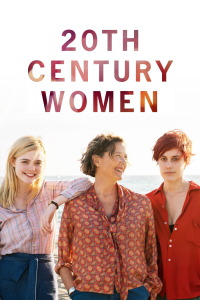
A step back from Mike Mills' terrific 2011 film Beginners, 20th Century Women is another somewhat autobiographical film from the writer/director. Yet, this one feels decidedly less assured. Embracing formalistic indulgences along the way that clash with the realistic and natural tone of the film, the film lacks cohesion at times and feels overly ambitious for its story. Fortunately, there is so much to enjoy about this film. From the style and general aesthetic feeling given by the film, as well as great characters and acting, 20th Century Women is an often moving and funny film about Mills' childhood surrounded by women in Santa Barbara. In many ways, it is a film about how people do not understand one another, in spite of all of our efforts to figure out what makes those around us, and ourselves, tick. In this endeavor, 20th Century Women is incredibly successful and finds a lot of resonance. Unfortunately, unnecessary style distracts from the film and feels more indulgent than anything.
These stylistic indulgences include montages of old pictures of historical events, the rainbow streaks following the cars as they drive on the highway, and giving the future of the characters after 1979. Of these, the rainbow streaks seems to be the one that I have the most trouble with. It helps to create the drug induced, dream-like atmosphere of Santa Barbara, yes. Santa Barbara and 1979 are very much characters in this film themselves with the city coming to represent the loose, free thinking nature of the characters, and being just as influenced by drugs as they are. 1979 comes into play with the time, Jimmy Carter's speeches, and how it is a point of change and a turning point in their respective lives for a variety of reasons as shown in the film. Yet, the rainbow streaks feel indulgent. The film's character are supposed to reflect real people and its situations are somewhat real occurrences. Yet, the style hints at Mills indulging too much in artist tendencies. The out of place montages of old pictures that do not have much to do with the plot suffer from the same indulgence. It feels wholly misplaced in a film of this type and is not something I remember Beginners suffering from. If memory serves, that was a very grounded film, set in the real world and rarely diverting from that world. Instead, Mills attempts to create the same psychedelic and 1970s trip created in films such as Inherent Vice or The Nice Guys. The film is stepped with nostalgia and these glory days of 1979, but the film suffers from this style. The trippy atmosphere is interesting, but is ill-fitting for a story of this ilk. In the aforementioned films, it works because the films are clearly going for a certain aesthetic and very formalistic in its story. But, Mills' story here is very real, authentic, and raw. These nostalgic indulgences for a film as real as Manchester by the Sea feel more like something out of La La Land, which leaves it feeling incredibly jumbled in regards to its style and intent.
The film also suffers from its dialogue. Once more, it attempts to create great characters and it succeeds. The writing is glorious when it comes to these characters, but the dialogue lacks the punch of realism. It feels written and, again, feels ill-fitted for a story of this nature. Honestly, I may need a rewatch of this, but conversations often fall awkwardly flat. Such as:
"I like the way your hair smells.".
"I make my own shampoo.".
"Of course you do.".
This dialogue feels more like Wes Anderson dialogue in a very formalistic setting. Instead, Mills tries to strike a balance between the two styles, but these lines just feel too quirky and purposefully odd to really resonate. Much of this film is like this and some of the dialogue does work quite well comedically, but feels as though it contributes to the tonal awkwardness of the film. Is it a realistic with real worlds, as the premise, characters, and situations would have you believe? It would also be in line with being semi-autobiographical. Or, is it an aesthetic filled joy ride through Santa Barbara's free thinking community with quirky dialogue? It is here where I struggle to rationalize why I still like 20th Century Women, even in spite of this tonal awkwardness.
The brilliance of 20th Century Women may reveal itself to me upon rewatches, but for now, it largely lies within its themes. Early in the film, Dorothea (Annette Bening) asks her son Jamie (Lucas Jade Zumann) to be there for Abbie (Greta Gerwig). Abbie rents a room from Dorothea and lives upstairs, but had been diagnosed with cervical cancer in the year prior and was going to see if the surgery had removed the cancer or not. Dorothea, knowing she would not be able to be there, wants Jamie to offer Abbie emotional support, regardless of whether the news is good or bad. In asking, she comments on how "men always want to fix problems for women", in order to steer him away from his male tendency to "fix things".
This review of 20th Century Women (2016) was written by Spangle on 24 Jan 2017.
20th Century Women has generally received very positive reviews.
Was this review helpful?