Review of 2001: A Space Odyssey (1968) by Vasco M — 29 Apr 2015
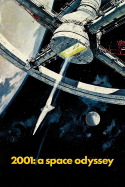
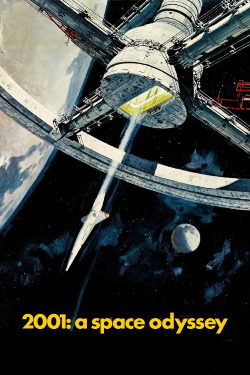
Kubrick's take on sci-fi is a masterwork of technical achievement. Just think: all of the special photographic effects are pre-digital, done with models, matte paintings, trick shots, etcetera. It boggles the mind and more so since these effects hold up even in the face of today's easier digital manipulation where the laws of physics no longer apply.
Kubrick's notorious perfectionist streak and obsessive attention to detail really pay off. However, the film is also a cracked take on evolutionary theory (involving the intervention of intelligent alien life, one supposes) that loses coherence as the film proceeds to its concluding "Jupiter and Beyond" (stargate) hallucination sequence.
But the two middle sections, involving, first, Dr. Heywood Floyd's trip to the moon and, then, Dave and Frank's mission to Jupiter with paranoid supercomputer HAL-9000 are really the heart of the movie.
Watching again, it is impressive that very little actually happens despite the film's 140 minute length. The plot is glued together with hypnotic scenes of outer space movement (space ships and astronauts drifting), set to classical music (by Strauss, by Strauss) and scenes with the black monolith, eerily (and illegally) scored by Ligeti.
So, the "space between" means almost as much as the narrative elements do and somehow this makes the film pass quickly. In a word: timeless.
This review of 2001: A Space Odyssey (1968) was written by Vasco M on 29 Apr 2015.
2001: A Space Odyssey has generally received very positive reviews.
Was this review helpful?