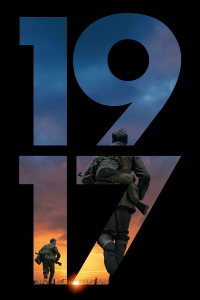
Review of 1917 (2019) by Bertaut1 — 22 Jan 2020
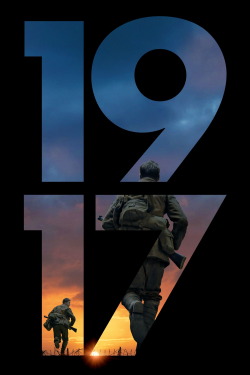
Although partly a technical showcase rather than a story, it's still a terrific Great War movie.
Written by Sam Mendes and Krysty Wilson-Cairns, and directed by Mendes, unless you've been living under a rock, you'll know that 1917 has been done in such a way as to give the impression that it all takes place in two shots (the marketing material says one, but it's two – there's a time-jump where no attempt is made to hide the transition). In reality, there are a lot more than two shots, but the edits have been digitally 'hidden', much like Birdman (2014) or Utøya 22. Juli (2018). And although I have some issues with it, I think Mendes has made an exceptional film, one in which form and content are tightly matched, with the style effectively delivering the story in a thematically justified manner.
April 6, 1917; the Western Front. German forces have fallen back, and a pursuing British colonel believes that if he attacks now, he can turn the tide of the war. However, he's unaware that the Germans have fallen back to the heavily fortified Hindenburg Line and are lying in wait. With communication lines cut, two British Lance Corporals, Will Schofield (George MacKay) and Tom Blake (Dean-Charles Chapman) are assigned to physically carry an order calling off the following morning's attack. If they fail, 1,600 soldiers will be slaughtered.
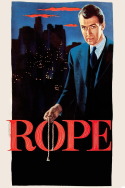
So, the film's big selling point is its aesthetic design. The use of the single-shot format is such a noticeable type of form that whenever it's used, it automatically places pressure on the content, which must justify why the film is shot this way, or the form becomes gimmicky. Think of Rope (1948) which was edited to look like one shot, or Victoria (2015), which was legitimately one shot. Very little in either film justifies the stylistic design. Compare this with one-shot films such as Russkij Kovcheg (2002) or the aforementioned Utøya 22. Juli, both of which tie form to content. And I think Mendes and cinematographer Roger Deakins achieve like synergy.
Is the one-shot effect distracting? At first, yes, it is a little, especially if you're trying to spot where editor Lee Smith has hidden the transitions. But after sussing two edits in the first twenty minutes, I stopped looking, because I was just pulling myself out of the film unnecessarily. In essence, once you go with the aesthetic on its own terms, you forget about trying to spot the edits, instead letting the cinematography do exactly what it's supposed to do – immerse you.
The opening scene is a superb introduction to the technique. The film starts with a shot of a daffodil field, before pulling back and revealing Schofield and Blake taking a break. They rouse themselves and begin walking, first past more resting soldiers, then the mess, then down a ramp into the trenches. We see the tactile transition from Edenic to hellish because we're moving in real-time through the milieu; we see the boundary between peace and war because the characters walk along that boundary. You shoot this sequence conventionally, and you undercut that.
Along slightly more conventional lines, one has to commend Deakins's work during the nighttime scenes in Écoust-Saint-Mein. As we pass through the ruined town, the only light is from flares creating very hard shadows in constant motion. The whole thing is almost otherworldly, and as the light traverses the sky, it's as if the ground itself is in motion. You won't find a better study in how to compose a sequence using light and shadow.
Thematically, by its very nature, 1917 is far more focused on the micro than the macro – you might learn something about life on the front, but you'll learn nothing about the politics behind the conflict. Partly because of this, it avoids, for the most part, the kind of cartoonish jingoism that make films like Saving Private Ryan (1998) so obnoxious. Indeed, the protagonists' nationality is largely anonymous, which is not something you can usually say of a war film. On the other hand, you shouldn't expect too much psychological insight. The Thin Red Line (1998) it most definitely isn't.
The story is unquestionably paper-thin, but that's by design. One criticism I did have, however, is how well-groomed Scholfield and Blake are. One only need watch They Shall Not Grow Old (2018) to see how unrealistic this is. Indeed, they look like they've just stepped out of the makeup trailer most of the time, and it's glaring enough to pull you out of things on occasion.
All things considered though, I thoroughly enjoyed 1917. The single-shot strategy worked well, and even if the film is weak from a character/storyline/theme perspective, it didn't really matter when form and content are this well matched. It could have been an empty technical exercise, but Mendes hasn't allowed that to happen. The Great War was hell on Earth. 1917 doesn't make us feel what that hell was like. Because no art form can do that. But it's a very fine approximation.
This review of 1917 (2019) was written by Bertaut1 on 22 Jan 2020.
1917 has generally received very positive reviews.
Was this review helpful?