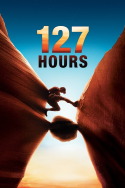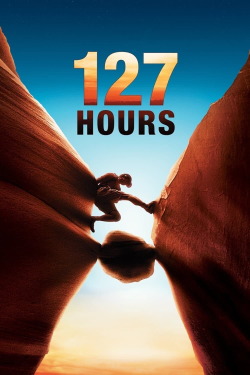
Review of 127 Hours (2010) by Cameron J — 22 Sep 2012
"You'd better stop, put on a kind face; between a rock and a hard place!" Ha, it's funny because Rolling Stones... or rock (Oh, as Robert Plant would put it, "to be a rock and not a stone") is how Aron Ralston got himself in this situation in the first place, which is probably why they didn't play that song, because this film is just too darn serious to be funny... which is why they got the dude from "Pineapple Express". Shoot, thank goodness James Franco's an awesome actor or else I'd be a bit thrown off, though not too much so, because Danny Boyle must clearly know what he's doing, considering how much he's placed himself into this project, so much so that he's doing more than just directing. Oh boy, Boyle must be letting "Slumdog Millionaire" get to his head, because he went as far as to also co-produce and, yes, even co-write this film. ...Oh wait, now that I think about it, maybe Danny Boyle didn't do too much outside of direct, because I'd imagine a co-producer doesn't have a whole lot to do, and for his first screenplay, Boyle takes on the story of some dude quite literally, as the Stones put it, "stuck between a rock and a hard place", and still has an Oscar-winning co-writer, so, really, how much writing could have gotten done? Hey man, I don't care what Danny Boyle does, just as long as he makes a film, or at least with this much passion, because, Boyle howdy, this is not simply his best film yet, but an excellent film all its own, which is good, because if you're going to stick me in a canyon for 90 minutes with James Franco and no Seth Rogen to make me laugh, your film better be good. Well, as sure as sunshine, this film is more than just good, and yet, as remarkable as this film is, it's not like it doesn't slip and go pinned by some undeniable missteps, from which it doesn't escape without its share of scars.
Danny Boyle has had a history of letting filler get a little bit carried away, to the point of slowing down a film's momentum and plot value, yet with this film, the plot is actually in dire need of some filler if it is to be kept going, and let me tell you that the filler, well, really isn't too much less problematic. Don't get me wrong, it's not like this film feels as though it runs 127 hours, and I certainly want more bang for my buck and more than a thirty or forty-minute-long experience, yet the film finds itself perhaps too padded out by filler and other loose scenes that stretch on and on, keeping the film pumping while slowing down momentum at the same time. True, the filler and loose scenes have enough reasonable dynamicity to them to keep the film just lively enough to keep you from going a bit insane, yet you can only do so much to liven up over an hour of watching someone try to survive in a canyon with a rock on his arm before you take good advantage of your, well, hopefully having an arm to check your watch time and again, especially when, after a while, the dynamicity, while still reasonably active, dilutes a bit and leaves the film to get a bit repetitious. Of course, the steam damage done by the padding and repetition isn't really helped by the film's dry atmosphere, because if you thought that the moments of considerable slowness in "Slumdog Millionaire" were simply a part of Danny Boyle's experimenting with dryer storytelling, then brother, get ready for Boyle to keep that experiment going, though don't get too terribly worried. Surprisingly, the film isn't quite as slow as I feared, and is certainly not quite as slow as something like "Cast Away", which was still pretty awesome, being about as often entertaining as it is slow, yet the fact of the matter is that the film is slow, often being a dry meditative piece that drifts along limply, surprisingly rarely, if ever to where you're all that disengaged, yet still to where there come points here and there in which you'll find yourself compelled to double check your patience, especially when that slowness is made all the worse by the aforementioned padding. Still, when you get down to it, while padding and moments of dryness slow down the film's momentum, the film was never really to have the momentum of a masterpiece, being too minimalist in story for its own good, which isn't to say that that's too much of a bad thing, yet it is to say that this film is what it is, and that is why it falls short of being truly great, much like "Cast Away". Of course, also like something like "Cast Away", with all of its minimalist scope, padding and slowness, the final product comes out nothing short of remarkable and ultimately generally transcendent of its faults, for although this film is what it is, what it is is an upstanding example of what it is, and, by its own right, an upstanding dramatic piece, or, if nothing else, an upstanding style piece.
While definately not as stylish as something like "Millions", or even quite a few other Danny Boyle films, this film opens up "Woodstock" style, presenting an awesome three-way splitscreen that shows either different angles of a scene, or even stuff that's all but, if not decidedly irrelevant to the main progressing scene, which definately tells you that you're in for one stylish show, and sure enough, the film takes on plenty nifty and unique stylistic concepts that keep things lively, especially considering that Danny Boyle has quite the editor to back up his stylistic tastes. Knowing a thing or two about being trapped in a rocky environment, seeing as how he edited "The Descent" and directed "The Descent Part 2" (I can think of plenty of people who would say that the fact that they got the editor to "The Descent" to direct the sequel should pretty much tell you of the quality of "The Descent Part 2"), Jon Harris is brought in as the latest Danny Boyle editor, and after all of his trials with Chris Gill and the Oscar-winning Chris Dickens, it would appear as though Danny Boyle has not simply finally found a worthy rival to Masahiro Hirakubo, but found someone who actually tops Masahiro Hirakubo as Harris delivers on those kind of cleverly snappy cuts, while stylishly playing with other editing tricks to not only supplement the impressiveness of the film's style, but the effectiveness of the film's substance, being able to convey much in the way of time passage and tone with cleverly elaborate tricks that stand as more than just nifty gimmicks, and that right there, as well as other top-notch editing tricks that you really do have to see to believe, are the marks of truly outstanding editing, and style for that matter, which isn't to say that editing is the only outstanding aspect that backs up and supplement the impressiveness of the film's style. If you thought that James Franco looked high when he co-hosted the 83rd Oscars, one can only imagine what potent drug the Oscar nominators were on when they were selecting films for Best Cinematography, because the fact that this, of all Danny Boyle films, was not nominated is nothing short of truly criminal, as recurring Danny Boyle collaborator Anthony Dod Mantle and "28 Weeks Later" cinematographer Enrique Chediak team up to deliver stellar photography that has moments in which it boasts Mantle's radiantly detailed color and lighting and slick shots, as well as moments in which it boasts Chediak's gritty color and fitting and clever marriage of both broad and intimate scope, yet either way keeping consistent in its deliver of striking visuals and unique shots that immerse you in this world, whether when Aron Ralston is taking you on a tour through Blue John Canyon or when you find yourself trapped in the canyon with Ralston. The visaul style of the film places you right in the heat of the moment, yet not alone, as the audible style is also something to write home about, for the sound design is very clever in its absorbing the environment with boastful detail that gives you an immersive feel for the situation, or at least when it's not letting the jams - whenever they're played - come in loud and clear, which is very good, or at least most of the time. Even with a few oldies and goodies, being that this is a pretty contemporary film, or rather, a Danny Boyle film, the soundtrack doesn't always deliver on the best tunes, yet the film knows how to compensate by having those tunes work into its context cleverly and uniquely enough to supplement substance (If you, or at least I thought Pete Jackson's using This Mortal Coil's boringly sappy cover of "Song to the Sirens" to surprisingly striking emotional effect in "The Lovely Bones" was impressive, just wait until you see how they work Sigur Rós' just alright "Festival" into the emotional ending to this much better film), something that A. R. Rahman's score work, which never ceases to deliver good tunes, does just as well. The film can't escape slowness, yet its style breathes a lot of life into it and keeps it from getting too slow, much like Danny Boyle's and Simon Beaufoy's screenplay, for although I joke about how there can't be too much writing to do when handling a film about some dude trying to stay alive in a canyon, what dialogue there is is sharp, and the set pieces, while not ceaselessly dynamic, remain dynamic and well-concieved enough to give this film an engaging narrative structure, which isn't to say that Boyle's writing is the only thing of his that makes this film as engrossing as it is. These kind of slow survival dramas are among some of your more remarkable cinematic phenomena, as they should, with all of their slowness, do-little plots and minimalist scope, for all extents and purposes, be naturally flawed to the point of being likely to fail, or at least underwhelm, time and again (Much like mediative, borderline plotless art pieces that the critics love to make up excuses for, when really, they're just tedious), yet time and again these kind of films have worked better than they should, and while there's no getting around natural shortcomings that render films of this type, and certainly render this film, incapable of achieving true brilliance ("Cast Away" was a borderline masterpiece, but because of its being what it is, it will forever remain borderline), what defines the success of a film like this, and has defined the unlikely excellence of such films of its type as "Cast Away", is the skill and relationship between the central performer and the director who leads the way, and what this film does is deliver on defining power within the chemistry between and individual performances of both James Franco and, of course, the director, the film's other star, because when you get down to it, as upstanding as Franco is, the second and perhaps just as remarkable force carrying this film is Danny Boyle.
I complain about how it's criminal that this film was not up for Best Cinematography at the Oscars, but it's borderline sacrilege that this film, with all of its Best Actor, Best Adapted Screenplay and Best Picture nods, was not up for Best Director at the Oscars (Of course, Tom Hooper beat David Fincher, so that whole category was riddled with sacrilege that year), as this is one of, if not Danny Boyle's most inspired directorial performance to date, and with him being such a great director, you know that's saying something, and sure enough, as great as Boyle's style is, it's his storytelling that really carries this film. The film's atmosphere goes graced with Danny Boyle's usual immense pop charm, which, when married with the stellar style, breathes a lot life into this project and leaves the sting of the potentially disengaging padding and slowness to go diluted, certainly not to where they don't still sting, yet to where the film comes up with enough entertainment juice and intrigue to sustain your attention, which isn't to say that you ever forget that this story isn't the livliest out there, for although Boyle's charm gives you insight into the spirit of Aron Ralston, it's Boyle's dramatic atmosphere that truly defines both Ralston and this story, which may be an ultimately triumphant one, yet doesn't get to have an inspiring resolution without conflict, and sure enough, this story has a lot of consequential weight to it that Boyle manipulates brilliantly, for although you know what is to happen, being that this story has been recognized throughout the world for, as of 2010 alone, seven years, Boyle still manages to draw raw intrigue that keeps you on the edge of your seat, wondering what is to happen next, even though you already know, and when this story finally culminates with the conflict solution that we all know and dread, Boyle, who has had a history of going too far with gore, finds a fine balance between restraint and detail, showing you just enough to establish skin-crawling tension, while respectfully taking enough restraint to leave substance to - pardon the choice of words - "cut through" and have you cheering Ralston on. Boyle brings this story to life with deep inspiration that establishes enough thorough intrigue to sustain your attention, especially when that intrigue becomes raw tension, and yet, Boyle would be doing a criminal disservice to this worthy story if he were to just go on and on about how tense everything was, because Ralston's story is just as much, if not more an emotional one than tense one, which is why Boyle pulls out all the stops in his control of the film's emotional resonance, gracing this film with poignant depth and genuine emotional intensity that has been found in other Danny Boyle films, yet never at this level of intensity, and whether you're watching Ralston reflect on his life and loved ones or trying to watch the powerful ending through all of those pesky tears, you'd be hard pressed to not be moved time and again throughout this film. The film has its charm, as well as its heartbreaking moments, and even scary moments, yet what stands as the most intense are the inspiring moments that ultimately define this film, not just as a remarkable triumph, but as what is certainly the feel-good film of its year, if not the feel-good film of several years, because even though Boyle and the film have their faults, Boyle ultimately carries this film and helps in making it as upstanding as it is, being rivaled in skill only by the film's onscreen lead force, or rather, acting force to be reckoned with. If they're not going to nominate this film's lead performance's only formidable opponents, Leonardo DiCaprio's once again masterful performance in "Shutter Island" (What is the Oscar's beef with the greatest actor working today?) and, of course, Joaquin Phoenix's tour de force performance as himself, then forget Colin Farrell, or Colin Farth, or Hugh Grant, or whatever his name is and his stuttering self, because James Franco delivers the true greatest performance by a male lead of 2010, keeping consistent in firecracker charisma that wins you over, does about as good of a job as Danny Boyle's atmospheric charming in defining the heart and spirit within Aron Ralston and establishes a very human presence that is made all the more potent when Franco "cuts" the charisma and gets down to truly revelatory dramatic acting that shows us a side of Franco that has never been tapped. During his life-changing entrapment, Aron Ralston faced overwhelming frustration, unbearable terror and heavy anguish, as well as potent hope, thoughtful self-evaluation and revelation and, in the end, overwhelming joy, all of which are conveyed seamlessly and transformatively through James Franco's masterfully layered and assured presence and grand emotional range, which covers everything from broad emoting to transcendently poignant expressiveness that carries us into the soul and human depths of Aron Ralston, into whom Franco effortlessly becomes, thus.
This review of 127 Hours (2010) was written by Cameron J on 22 Sep 2012.
127 Hours has generally received very positive reviews.
Was this review helpful?