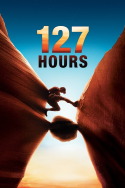
Review of 127 Hours (2010) by Deise F — 01 Jul 2012
For better or for worse, the film by Danny Boyle ("Trainspotting," "Slayer") is hyperbolic and supported in the edition. Their stories depend on how the images are juxtaposed and part of the narrative force of his films comes from a rapid and dynamic assembly. Some see this as the high quality of the director, to the extent that his work is nimble and engaging. Others point to this as their main weakness, as the filmmaker would be unable to tell a story without the usual frills aesthetic that make the movies in real experiments audiovisual sensory and emotional needs of others less.
"127 Hours", his new work, also has an agile and editing assumes that made Boyle's fame. The assembly is the driving force behind the long, combined with a soundtrack that plays an important role and a photo that relates to the aesthetics of advertising. But while the filmmaker does not take your foot off the accelerator and fills the viewer with images and more images, the film is nonetheless a more contained Boyle. This is because the emotional charge of the film depends not only the look of long, but relapsed on the performance of James Franco.
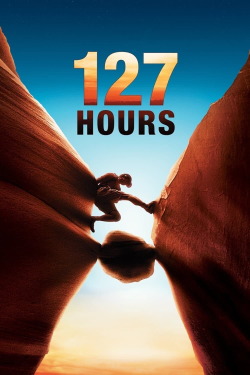
Franco (the Oscar-nominated role) is living a young adventurer who leaves for another weekend at tracks in the middle of nowhere. Between a rock climbing and another, the boy slips and finds himself with his arm trapped by a heavy rock. The plot is this simple and direct. That's where "127 Hours" is no longer merely a stylistic tour the Boyle amid rocks and saw a movie to make James Franco shine.
Among flashblacks who have a bit of character and failed attempts to get rid of the climber who got in trouble, we see an actor to show all the talent in a role that demands both physically and psychologically. Full of charisma, Franco won the audience every hallucination, burst of anger or show of fear and prevents "127 Hours" is just another movie to overcome here in a registry and sensory hallucinated.
At this point, the direction hyperbolic Boyle ends up falling like a glove. If the film could well be confused with a mixture of "Castaway" with "Buried Alive" is driving the accelerated pace filmmaker gives fluidity and essentially limited to a plot in terms of space and time. Still, Boyle tries not to overshadow the show of Franco, who cries, smiles, cries and even talk to himself, presenting a range of emotions without ever leaving to convince the public that is really going through that situation limit.
Thus, it is reassuring that Danny Boyle has avoided repeating the same strategy of "Who Wants to Be a Millionaire?" Production plot and shallow face that became successful thanks to the antics of the direction of the filmmaker. If this was a film aesthetic too trying to disguise their poverty narrative in "127 Hours" Boyle's direction does not arise ahead of the story, but in its favor. James Franco and the public wins.
The narrative is linear minimally. The soundtrack is in place. The photograph fulfill its function. And even when the direction of Boyle seems to overlap with the history (especially the hallucinations experienced by the character), the film leaves the rails. Not even the already much talked sequence in which Franco has to start his own arm to survive (scene filled with blood and that does not spare the viewer) obscures the honesty with which it is represented.
Based on a true story, "127 Hours" is, yes, about overcoming and willpower. It is also a film of one man. But all these supposed cliches are left behind when Aron Ralston (Franco) cuts off his own arm and gets another chance to live. Franco understood the message and leaves all his dramatic potential shine on the screen. Boyle fits a cliche here, there an option corny, but the film ends leaving the viewer goose bumps. Although the camera here is accelerated, what counts is the same emotion.
This review of 127 Hours (2010) was written by Deise F on 01 Jul 2012.
127 Hours has generally received very positive reviews.
Was this review helpful?