Cinafilm has over 5 million movie reviews and counting …
Sitemap
Search

Last updated: 07 Jun 2026 at 07:48 UTC

Back to movie details

Review of by Luke C — 03 Jul 2017

Share
Tweet

Martin Scorsese is considered by many to be the greatest director of all time. I would probably have to disagree. Don't get me wrong, I love Scorsese; I would just say that personally I like Spielberg and Kubrick and Tarantino and others more. My favorite Scorsese movie is Taxi Driver. It's great; simple as that. His others were great as well, but I never liked them quite as much as everyone else seems to. Raging Bull is great, yes, but GoodFellas, while very good, doesn't achieve nearly the cinematic heights for me that it does for everyone else. The Departed? I didn't like it, sorry.

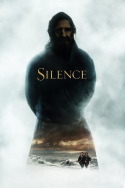
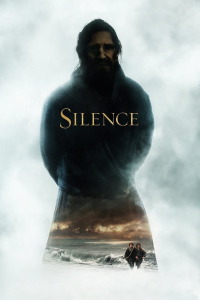
So now that I've upset a bunch of Scorsese fans for little to no reason, I will say that this is my second favorite work from the acclaimed director, right below Taxi Driver. This is a great movie, and already a shoe-in for top 10 of the year (we're going to count this as 2017 because that's when the wide release was.) It's about, in the most simplistic terms, religion, which is something the director has explored before. He angered most practicing Christians back in 1988 with his controversial film, The Last Temptation of Christ, and then made the film Kundun nearly a decade later, which I know very little about.

His third installment in his "religious trilogy" is sure to anger more than a few Christians as well. The film stars Andrew Garfield and Adam Driver as two Jesuit priests back in 17th century Portugal who go on a mission to Japan to find their long lost mentor, Father Ferreira (Liam Neeson), who is rumored to have publically renounced Christ. The two priests are sure this is not the case, of course.

In Japan, where Christianity is outlawed, the two find themselves in grave danger. Nevertheless, they decide to preach to groups of Christians that they find, and give them small tokens of Christianity that Rodrigues (Garfield) worries that they worship more than God himself. The Japanese do find these Christians, and ask them to step on a fumi-e, a carved image of Christ, therefore publically renouncing him. The devout refuse to, and pay with their lives. There is more suffering to come though. Much more. Christians suffer throughout this entire movie, sacrificing themselves for God. Rodrigues, being a Jesuit priest, of course encourages this. He would be willing to die for God, and believes that others should be so willing to put their faith to the test.

This is where the film really gets interesting. Rodrigues begins to discover what putting your faith to the test really means; what faith itself really means. He feels he is answering God's call by refusing to renounce him, but is caught in a paradox when he is asked to step on a fumi-e in order to spare the suffering of fellow Christians. "It's just a formality," his persecutors encourage. He discovers what the call of God truly is, and we the audience feel like he has truly made a spiritual journey by the end. He begins in the ideal, and ends in the practical; the debate between absolute and relative morality takes place, and Rodrigues must adapt his methods accordingly. This is a very deep and thought-provoking film, and one that will have you thinking, granted you wish to ponder the questions it poses.

--.

Rating: 4/4.

This review of Silence (2017) was written by on 03 Jul 2017.

Silence has generally received positive reviews.

Was this review helpful?

Yes
No

More Reviews of Silence

More reviews of this movie

More Reviews by Luke C

More Reviews by Luke C

Share This Page

Share
Tweet

Popular Movies Right Now

Movies You Viewed Recently

Get social with CinafilmFollow us for reviews of the latest moviesCinafilm - TwitterCinafilm - PinterestCinafilm - RSS