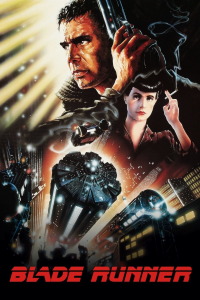
Review of Blade Runner (1982) by Jon D — 15 May 2014
I am a part of the great amount of sci-fi nerds and film enthusiasts that consider Blade Runner to be the best science-fiction film of all time. Does it bring forth a new concept? Not really, considering it was a brainchild of Philip K. Dick's (a science-fiction master, by the way) "Do Androids Dream of Electric Sheep?", but what it takes away from the novel it makes up for. In fact, it goes far past the point of compensation. But don't take that as a complaint; Harrison Ford does a stunning job donning the trenchcoat of a noir character, which in this case is a bounty hunter tasked with tracking down illegal Replicants (androids, in otherwords). If you wish to create a story further exploring the possibility of robots/androids as intellectual beings, look no further than Blade Runner for advice and inspiration. Blade Runner is the granddaddy of one of science-fictions oldest philosophical/ethical dilemmas; can non-organic material become/be considered as an actual "thinking" being? And as Blade Runner shows you, the answer to that question is not so simple.
Blade Runner is one of those films that even after the film is over, you will contemplate the questions it asks for days, and if you're a sci-fi nerd like I am, even for years on end. Blade Runner is the father of all modern science-fiction; if you're not following Ridley Scott's vision and insight, then there is something wrong with your science-fiction.
This review of Blade Runner (1982) was written by Jon D on 15 May 2014.
Blade Runner has generally received very positive reviews.
Was this review helpful?